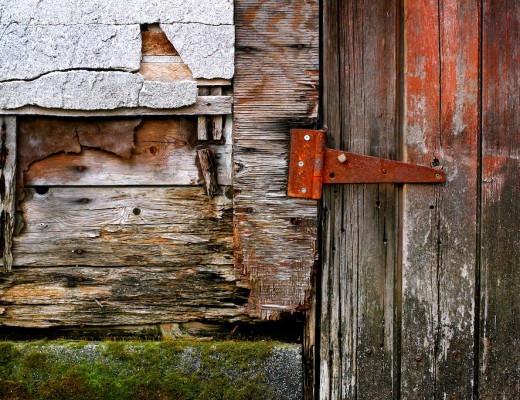
Lurking around every corner is texture. You may not notice them upon first glance, but if you take a closer peek in the crooks and crannies of your neighbourhood, you will find a whole world of excellent textures to capture: Mossy rocks, rotting wooden fences, rusty hinges, chipped paint on window sills, and corrugated metal doors. It’s out there just waiting for you to shoot! And unlike people and animals, mossy rocks sit still for hours with little to no complaints.
You’ll want to shoot in the early morning or during magic hour (one hour before sunset) to get the best light for showing texture. Great light will help define the surface texture and bring out all the little details. Get up really close with a macro lens and magnify the subtle flaws of the texture. Or conversely, look for patterns in the flow in the texture on a larger scale. Think of the patterns created by hundreds of roof shingles, or miles of rippled sand.
If the texture is part of a larger scene like the rippled sand, try shooting a wider frame like the shot below. The contrast of the different textures makes the photo dynamic. Framing contrasting textures together, i.e., blades of grass breaking through a heavy concrete wall, can also provide an extra thematic layer to your photos. You know, struggle against oppressors and the environment and sustainability and serious stuff like that.
Even if you don’t see the covert symbolism, somebody smart will. When they tell you, just nod, smugly smile and say, “Mmm. Yes, that was exactly what I was trying to capture. Not many people catch that.” Even if it’s not true, it’s a double win. You seem like a deep artist for actually creating something with meaning, and they feel like an intellectual “art critique” for having their thematic analysis affirmed.
PS. Don’t be afraid of trying different angles, especially low ones, using different lenses, and experimenting with composition.