Posts Tagged ‘portrait photography’

My 18 Favorite Portrait Photos & How I Created Them

Oct 25 2011

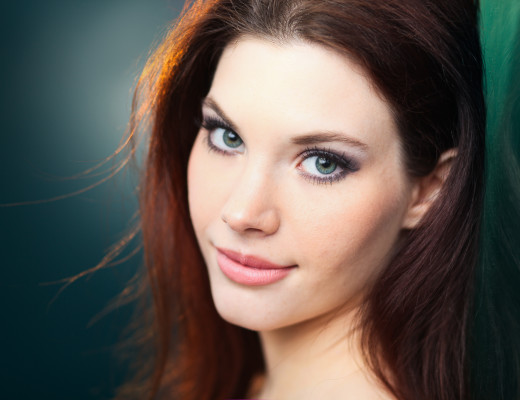
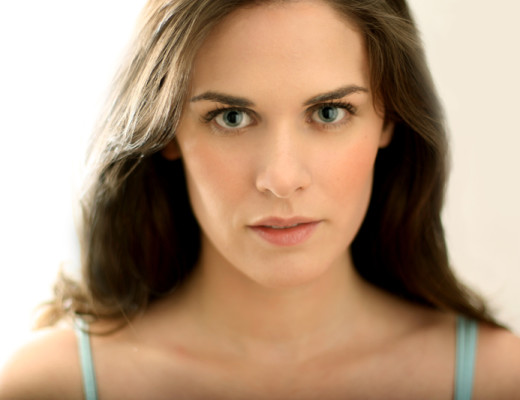
lovely Siri, not the iOS Siri ;)

Beautiful Siri. Canon 5DMKII + 85mm f/1.8, 1/60, f/2.5, ISO 100.

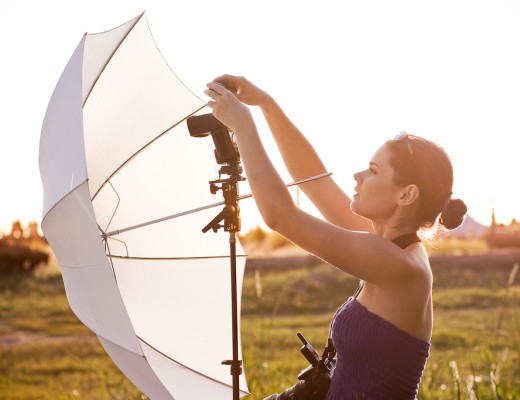
I use cheap and simple set-ups for my portraits. You can achieve most of these looks with one or two flashes ($350), some Alien Bees Cyber Sync wireless triggers ($120), a basic umbrella kit ($70), a foldable disc reflector ($40) or foam core boards ($2), and some coloured gels ($10). While some of these were taken with my pro-level Canon 5DMKII ($3500), many were taken with my old entry-level dSLR, the Canon Xti/400D ($350). You can take amazing portraits with any camera, the key is great lighting. Here are 18 of my favourite portraits and the details on how I shot and lit them:

For the above outdoor shot of Siri (the model, not your iOS girlfriend), I used a basic 2 flash set-up to liven up a dull location. I lit her face with one 580EX flash shot through an umbrella directly in front of her about 3 ft away. To fill the shadows on the lower right side of her face, I used a silver reflector to bounce the light from the flash. The second 430EX flash was shot camera left behind her to light her hair. The flashes were triggered wirelessly with the Alien Bees Cyber Syncs.

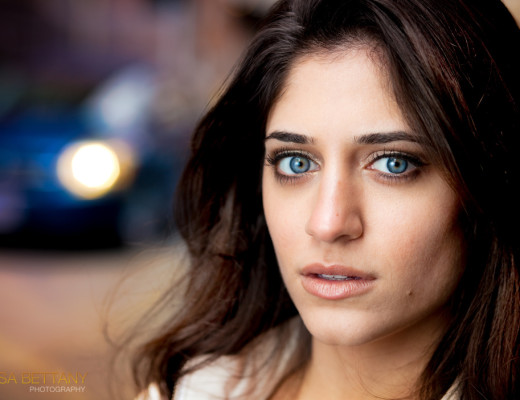
Nicole's Baby Blues

Nicole. Canon 5DMkII, 85mm f/1.8 lens, 1/80, f/2.2, ISO 100.

This was my very first shoot with my new 5DMKII. I photographed Nicole in a bus stop as it was getting dusky. Not the most glamorous location, but I noticed that the lights of the cars driving were making lovely bokeh circles in the background. I used a simple one flash set-up: One 580EX flash, shot through an umbrella above and slightly left of camera about 3 ft away from her face. The closer the light source is to the subject, the softer the light. Using a shoot through umbrella also gives a lovely catch light in your subject’s eyes. If you are not a fan of the reflection of the spokes you can always clone them out in Photoshop.

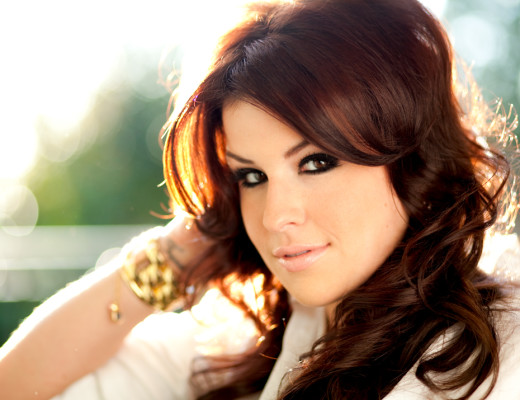
AJ vintage

AJ. Canon 5DMKII + 85mm f/1.8, 1/200, f/2.0, ISO 100.

I used one of my favourite, easy set-ups on this shoot with singer, AJ. She was back lit with the sun through a large open window which gave her a natural hair light and a single strobe was shot through a large umbrella on 1/16 power to fill her face. The background was blown out and bokeh’d which I really like for this look. I used Photoshop to create a faux vintage cross-processed look. Click here for a video tutorial on how to create a similar look.

*i found you*

Kara. 5DMKII, 85mm f/1.8, 1/200 @ f/2.8, ISO 100.

This shoot was quite experimental. I wanted to completely blow out my background and create lens flare that wrapped around my subject. I used back lighting with a bare strobe (580EX) at 1/16th power directly behind Kara slightly to the right. I played with different camera positions to get the extreme lens flare that I wanted. This shot was a bit of a happy accident because the placement of the lens flare was difficult to predict. To balance the light on her face, I placed a 430EX directly in front of her about 2 ft away & diffused the light through an umbrella. This was shot at a very wide aperture (f/2.8) so I had to make sure to get my focus tack sharp on her eye, as everything else was out of focus.

Kylee Epp Promo Shot

Lovely Kylee. Canon 85mm f/1.8.

This summery outdoor shot was backlit with the sun and then lit from the front with a 430EX flash with a 1/4 CTO gel (orange to give the image warmth) which was shot through a 52 inch umbrella at 1/4 power and triggered using a more expensive wireless trigger, the Pocket Wizard Plus II. If you want to go with the Pocket wizards, the gold standard of wireless triggers, but way more expensive than the Alien Bees, I suggest getting 2 FlexTT5s. They are the most versatile and can be used as both a transmitter and a receiver.

Stunning Shauna

Shauna. Canon Xti, 24-105 f/4.0 lens, 88mm, f/5.0, 1/200, ISO 100

This girl could be a CoverGirl. She was so natural and comfortable in front of the camera. Working with a great model makes a photographer’s job so much easier. She was backlit by sun with a 580EX shot through large umbrella 10 degrees to the right to fill. I shot this at f/5.0 which is slightly higher than I normally shoot at because I wanted to make sure I had sharp focus of her entire face and hair.

*eyes wide shut*

Bella. Canon 5DMKII + 85mm f/1.8 lens, 1/125, f/2.8, ISO 100.

I actually shot this photo through a glass window, so it has a slightly hazy appearance. I used two off-camera strobes: One behind the subject (bare) lighting the background, one in front with a shoot-through umbrella).

*Runaway*

Taravat. Canon 5DMKII + 85mm f/1.8, 1/125 @ f/3.5, ISO 100.

My model was freezing during this wintery shoot, so we huddled in a back alley. I was almost ready to give up on the shoot because there was no light. Then, out of the corner of my eye, I saw a car coming slowly towards us. I asked Taravat give me a lost/mysterious expression and I snapped this. I lit her with a very simple set up: One 430EX flash shot at 1/8th power shot through an umbrella.

*i don't love you anymore*

Katherine. Canon 5DMKII, 85mm f/1.8, 1/500 at f/5.0, ISO 100.

Sometimes all you need is magic hour natural light & white reflector. Easy peasy. I experimented with faux Redscale processing in post to give it a distinctive look and without the processing the background was lacklustre and uninteresting.

light in love

AJ. Canon 5DMKII + 85mm f/1.8, f/2.0, 1/80, ISO 100.

This was actually the first test shot of a shoot with lovely AJ. I was figuring out my camera & flash settings and the flash was dialed up too high so it blew out the top corner of the shot. I used a bare flash at 1/4 power, positioned behind her head, slightly right, triggered with Cyber Syncs. I am definitely breaking the cardinal rule of exposure, but I feel like it works here. It’s is blown out & harsh, yet blurry & soft. The subsequent shots weren’t nearly as interesting, and ultimately the artist chose this shot. Rules in photography are great guidelines, but as an artist you can chose to break and bend them to suit your vision. Plus, who doesn’t like breaking rules?

Beautiful Shauna

Shauna. Canon XSi, 85mm f/1.8 lens, f/3.5, 1/200.

I positioned Shauna so she was backlit by sun creating a nice hair light. I use this technique again and again. Backlight the subject with the sun, front fill the face with soft, even light from a strobe and a shoot through umbrella. For this I used a 580EX shot through umbrella 30 degrees to the right to fill. The 85mm f/1.8 lens creates really nice bokeh in the background.

Stephanie

Stephanie. Canon Xti + 85mm f/1.8, 1/125 at f/4.5, ISO 100.

This outdoor dusk shot was lit with one 580EX 1/4 power shot through umbrella above & slightly to the right of Stephanie.

Jay

Jay. Canon 5DMKII, 85mm f/1.8, 1/200 at f/4.0, ISO 100.

Again, the same easy one strobe set up: a 580EX shot through a large umbrella about 2ft from Jay’s face. Getting the light source close to your subject is the key to nice even, soft lighting. If you don’t have a flash, you can achieve a similar effect using a white bounce or foam core board that you can pick up in any craft store for $2. Just reflect the light source evenly on the subject’s face.

franziska's rainbow eyes

Franziska. Canon Xti (400D) + 50mm f/1.4

Another shot without any flashes. I was a bit nervous using stands and flashes around a pool and I had enough light to go without, so I just used the soft magic hour light and a silver bounce. If you shoot an hour before sunset you get beautiful light without any harsh shadows. You have to be quick though, it only lasts about 45 minutes!

Bella & Bokeh

Bella. Canon XSi, 50mm f/1.4, 1/80, f/2.0, ISO 100.

I wanted to try a moody night shot with city light background bokeh, so I set up a cool strobey night shoot with model Bella on my apartment balcony in Vancouver. I used a 430EX shot on full power shot through window with blinds closed, camera left to hit the side of her face and body. Another 580EX at 1/4 power shot through umbrella held 50cm in front of Bella’s face by my assistant. Both strobes triggered with Alien Bees CyberSync Triggers.

Pete Cashmore

Pete. Canon 5DMKII +85mm f/1.8, 1/200 at f/3.5, ISO 100.

I coaxed my more famous half, into being photographed with the same one strobe set-up I’ve been using during the windy, rainy spring months: A 580EX shot set on M at 35mm, 1/8th power, shot through umbrella placed directly infront approx. 2 ft. away. I added a lot more contrast and the blue background colour (previously boring and grey) through post-processing.

*beauty*

Siri. 5DMKII, 85mm f/1.8, 1/125, f/2.5, ISO 100.

This final shot uses those little coloured gels I mentioned. I used a 580EX shot through umbrella directly infront of Siri and a 430EX flash with full CTO gel (orange) shot behind Siri, camera left to light her hair. I held a silver bounce infront and below of Siri, slightly right of camera to fill her face. The bokeh in the background is actually rain being lit by the flash. And yes, she was very cold!

I hope this helps inspire you to take some amazing shots! Once you figure out a few simple lighting techniques, you’ll be on your way to creating beautiful portraits. Feel free to share your shots below :)

Behind the photo: Shooting One Strobe Portraits on the Fly

Apr 4 2010

*Runaway*
5DMKII + 85mm f/1.8, 1/125 @ f/3.5. Model: Taravat Makeup: Mika

Another moody & cold day for shooting outdoors. This was my first of three shoots I did yesterday. My model was freezing so we huddled in a back alley which was slightly warmer than the wind tunnel where we first started shooting. Nothing more glamorous than shooting in a back alley :/

I was using a really basic one strobe set-up: The 430EX strobe was set to Manual, 35mm, 1/8th power and was triggered using the Alien Bees Cyber Syncs. I softened the light by using a shoot-through umbrella. This set-up which works well if you are shooting outside on the fly and you can’t carry a lot of gear because you put your back out the week before :-/

*Runaway* one strobe set-up

I was almost ready to give up on the shoot at this point because there was no light and we were both shaking from the cold. Then, out of the corner of my eye, I saw a car coming slowly towards us. I asked Taravat give me a lost/mysterious expression and I snapped this. It was the last shot of the photo shoot and told such a story — almost like a scene from a movie.

Everytime I stick with a shoot to the bitter end, I always get an unexpected shot that I hadn’t planned. And often the last shots I shoot are the best.

What I’ve learnt from these shoots is that you never get a second chance to capture a spontaneous moment, so shoot furiously until your hands are numb and your legs are shaking and you know you’ve got the shot. Trust me, it is worth it to have no regrets with your photography.

5 Tips for Taking Better Portraits

Feb 7 2010

Pete Cashmore
Pete Cashmore by Lisa Bettany, 5DMKII, 85mm f/1.8, 1/200 @f/3.5, ISO 100.

Before I jump head first into 2010 Olympic coverage (3 days!!!), I thought I should give my favourite photographer followers some post love. Here are 5 Tips to get more professional looking portraits:

1. Light your subject.

Lighting is one of most important aspects in creating a great portrait. Good lighting is easy to achieve, but requires skill and an off-camera flash. Getting that flash off your camera and onto a light stand with a shoot-through umbrella may seem a bit daunting, but trust me, it’s the only way to guarantee that your photos are going to look professional.

The first thing I suggest is to go read Strobist’s lighting 101 section. Try to take in as much technical information as possible and then practice until you get it.

Things you will need:

  1. A strobe. I use the 580EX as my key light, and 430EXs for edge or back lighting.
  2. Lots of batteries. Speedlights eat through batteries like a sugar-deprived kid with a Pez dispenser. Buy lots of rechargeable batteries and always have two extra sets for each flash. Also remember that batteries take ages to charge, so start charging them up to a day in advance of a shoot.
  3. Wireless triggers. I recommend the Alien Bees CyberSync Triggers. They are way cheaper than Pocket Wizards and work flawlessly. You’ll need one transmitter and a receiver for each flash. You will also need PC sync cables. Also, if you are shooting with a flash, (like my 580EX) that doesn’t have a PC sync socket, then you’ll need to buy a hot shoe adapter for your flash.
  4. Light stand + umbrella adapter + shoot through umbrella. You can buy kits at photo store or find them on line. You can always use “human light stand”, but after a few hours they usually start to complain and demand food, so it’s probably best to just sink the $100 and get a metal one that you can abuse without feeling guilty.

Kara
Kara, 5DMKII, 85mm f/1.8, 1/200 @ f/3.5, ISO 100.

2. Engage with your subject.

As a photographer it’s really easy to get preoccupied with the technical details of a shoot and disconnect from your subject. Unfortunately, this disconnection between photographer and subject shows up like a red flag in photos. Nothing is worse than a portrait of a subject with dead, expressionless eyes. It’s something that no amount of Photoshop can fix.

To combat “zombie eyes”, stay connected to your subject and actively give them feedback throughout the shoot. Make small talk to your subject between shots, make sure they are comfortable and happy, tell them silly jokes if you need a smile. I find that with teen girl subjects, mentioning anything to do with Twilight or hunky vampires gets a great response!

3. Shoot in front of a simple, complementary background

Mostly Lisa halo
Some might argue that the foliage halo never goes out of style.

A bad background can ruin a good shot. Trees growing out of subject’s heads, shrubbery poking out of ears, messy piles of things poking from chins, & clashing colours will distract from your subject. When you are setting up your shoot make sure your background is clean and simple. You can remove things in post, but why add the extra work for yourself. Clear any mess away or choose a new angle.

The secret is to shoot at a low aperture >f/3.5 and focus on the eyes. This will create a dramatic depth of field, with the eyes tack sharp and the hair and background soft and out-of-focus. I tend to shoot most of my portraits at f/3.5 or lower because I love dramatic dof and bokeh.

4. Compose your shot.

The rule of thirds is a portrait photograher’s best friend. Learn it. Love it. Replicated it over and over. Portrait photography is something that benefits from strict compositional rules.

When I started, I studied the best portrait & headshot photographers and practiced replicating their work shot for shot. There is no shame in copying others composition, lighting, and settings when learning, and I strongly encourage it. Once you’ve learned the basics and have a good handle on angles and set-ups that works, you can start to explore your own style.

Shauna headshot
Shauna. Canon XSi, 50mm f/.4, 1/200 @ f/2.5, ISO 100.

5. Retouch your shots.

Nobody is perfectly flawless, but everyone wants to look flawless in their photos. While you don’t want to remove all the “character” from someone’s face, any sort of skin imperfection can probably be nixed without a word of complaint from your subject, especially if you are doing promotional headshots or wedding photos. As a model, it would stress me out to no end if I got a blemish before a photo shoot. If I would have known how easy it is to clone stamp that puppy away in one click, I would have way fewer restless nights and possibly consumed more chocolates. mm. Chocolates.

How far you want to take your retouching it is up to you. I think there is a definite point of no return that you should try to keep in mind when you are retouching. If the skin starts to look like plastic, then you should probably lay off the clone stamp a little. Keep your brush size small >20px and steer away from too much Gaussian blur. Use your aesthetic judgement, and get feedback from other photographers and even your clients.

10 New Years Resolutions Every Photographer should make

Jan 2 2010

Jesse Tucker set-up

I am clutching my 5DMKII and literally buzzing inside, thinking about the photographic potential of the new year. The possibilities are endless. Now, I just have to commit the time and passion required to become a great photographer.

In that spirit, I think we should all try to keep these 10 New Years Resolutions. Now, everyone say after me:

1. I will learn how to use my camera.

This seems like an obvious point, but we are all guilty of skipping our camera manual and just fiddling with settings. Ah, this one works right? Spot-metering? Why not. Hey, what does that button do? Seems to make things darker. Hmm.

I’m going to admit something to you that I ask you to keep hush-hush. I haven’t actually read my 5DMKII manual. I know. Horrible! I’m guilty of arbitrary button pushing and royally messing up shots because I don’t really know how to use my camera. Let’s all become technical experts of our cameras this year. Deal?

2. I will not use the Auto setting on my camera.

Instead of relying on your camera’s dubious Auto settings, force yourself to learn how to use manual settings. Upgrade to Aperture priorty mode (AV) first. Once you understand Depth of Field, jump into Manual mode. You will make mistakes and feel frustrated when you completely blow-out a shot, but this is the way we learn. Don’t get discouraged by your mistakes. Learn from them and push on!

i miss summer.

3. I will not use on-camera flash

The only photos you should take with an on-camera flash are ones that end up on your Facebook wall of shame. Tape down that pop-up flash if you have to. Instead rely on your skills as a photographer to capture shots in low-light.

Shoot with a wide-open aperture, as low as your lens will go. Decrease your shutter speed & increase your ISO. Steady your camera on a tripod, gorilla pod or table top. Invest in a good lens. I suggest the 50mm f/1.4 or the f/1.8 if you are on a budget.

Shauna headshot
Canon Xti + 50mm f/1.4 + 430EX strobe shot through umbrella

4. I will not be hindered by the gear I do not have.

You can take great shots with any camera. From an iPhone to a $20 Holga to cheap point and shoot to a 1DMKIII. Don’t let your lack of gear limit you, but rather let it open up new possibilities to be creative.

Until 6 months ago when I upgraded to a 5DMKII, I was shooting on a Canon Rebel Xti (400D). I shot weddings, actor’s head shots, fashion, landscapes, you name it. You don’t need a 5DMKII to work as a photographer. Get creative. Be resourceful. Rent lenses. Make reflectors with $2 poster boards. There is always a way to do things cheaply, you just need to hunt around a bit.

5. I will shoot in RAW

Everyone, go find your camera right now. I’ll wait for you. Got it? Ok. Set your picture quality to RAW. Done? Good! Take some snaps in RAW right now. Feel the power. Now you can start shooting for real.

Beauty & the Bokeh

5DMKII, 85mm f/1.8, 1/200 at f/2.0, ISO 100.

6. I will learn how to process my shots

No shot comes straight out of the camera perfect. Every shot needs a little bit of processing TLC to take it to the next level. Learning how to process photos can feel overwhelming at times especially if you are technically challenged. It really isn’t that scary, just time consuming. I recommend starting with Lightroom. You can download a free trial and take it for a spin. If you are completely confused, sign up for a Lynda.com account. It’s the best video tutorial site on the web.

7. I will share my photos with others on the web

I know so many photographers that take thousands of photos, upload them on their computer, and never share them. Some lack the confidence, some are worried about copyright infringement, and some just don’t find the time in their busy schedules to share their photos. What a waste! If you are not currently sharing your photos, go right now and join Flickr, Tumblr or Facebook and post three of your best shots. Done? Great. Hi-five!

8. I will accept critiques of my work.

Receiving criticisms about your photos is difficult and sometimes hurtful, but it is the only way we can progress as photographers. Yesterday I asked Joseph Linaschke to look at my portfolio and tell me honestly which shots should go. He told me to ditch 4 pictures out of 16. Pictures that I had spend hours shooting and retouching. I didn’t want to get rid of them and it physically hurt me to remove them, but after I did, my portfolio was much stronger.

light in love
Canon 5DMKII + 85mm f/1.8 + bare strobe 1/4 power behind.

9. I will set goals and be proactive about my photography career

I have personally been in a photographic rut for the past couple of months. The weather has been rainy and miserable. I’ve had been taking on other work to pay the bills and I’ve lost focus with what I want to do with my photography. So right now, you and I are going to sit down and set some goals, both small stepping-stone goals and big lofty life-changing goals. These are some of mine:

*I will learn one photography-related skill every day
*I will continue to improve my Photoshop skills on a daily basis
*I will book at least one creative fashion shoot every week.
*I will build a network of creative producers, stylists, make-up artists, and models

Lofty goal:
*I will get my photography published in a major publication this year!

Your turn! Write them down and post them on your blog, Facebook page, Twitter, Tumblr, etc. Get them out there in black and white type where you can’t dismiss them.

10. I will connect with other photographers

There is a vibrant and passionate photography community sharing their knowledge and experiences everyday. If you aren’t currently visiting the vast array of photography blogs and resource sites, you are missing out on a wealth of knowledge that won’t cost you a cent. Right now, join Twitter and follow these photographers

Let’s make 2010 a productive and inspirational year! What New Years resolutions are you are making?

Friend me on Facebook, Twitter, & Flickr.

18 Last Minute Gift Ideas for Photographers

Dec 22 2009

As a general rule, photographers can never have enough gear. And there is nothing that pleases us more than receiving practical and useful photography-related gifts. It’s true that most of the items on our “Dear Santa lists” loom in the 1K+ department, but there are plenty of little odds and ends in the under $200 that we all need and would love to receive.

Picture 89

1. Kata Sensitivity V ($90): Is the slimmest, sexiest photo/laptop combo bag out there. It has enough room for your dSLR, two or three small lenses e.g., 35mm, 50mm & 85mm), a 15″ laptop, and a flash. It has lovely little pockets for pens and memory cards as well. It is extremely comfortable and is excellent for travel & everyday use.

Picture 90

2. Crumpler photo bags: Crumpler makes the funkiest, designer photo bags on the market. If you have a teen shutterbug on your list, definitely opt for one of the limited edition”X Million Dollar House” bags. The 3 Million Dollar House $55 is perfect for light travel with just your camera body and one lens. I use the 6 Million Dollar House $119 for camera body + two small lenses. They are well-constructed, as well as being fun and flashy. They also have a pretty neat neck strap for $30 called Industry Disgrace.

Picture 99

3. BlackRapid RS-5 strap: Neck pain is one of the huge downsides of lugging your camera around with you all day. Unfortunately, as a photographer, that’s your job! So give your photo sweetie the gift of a better camera strap. I’ve been using mine for a week and love it. Yes it’s a bit bulky, and may look dorky with evening wear, but hey, we’re not the ones that are supposed to look pretty! Also, camera straps that say “Canon 5DMKII” on them are basically large, flashing signs that say, “Hey thieves, please steal me!” Sacrificing boasting rights > having your baby nicked!

Picture 91

4. Portable 5-in-1 Collapsible Reflector: Every photographer needs reflectors in all sizes, so you can never go wrong with a 5-in-one reflector. For portrait photographers, opt for a 22″ – 38″ multidisc, for fashion/wedding photogs opt for 48″ or bigger. There is no real difference in quality between brands so save your $$s and buy the cheapest one.

Picture 100

5. Memory cards: No photographer will turn their nose up at a high speed 8-16GB CF or SD card. Sandisk Extreme IIIs are ace. Seriously, you can never have enough. Also, some photographers prefer shooting on 2 or 4GB cards, in case something happens to the card, they haven’t lost as many shots. I like shooting on big cards. The more images I can pack in without having to change the card, the better.

Picture 92

6. Spare Camera Batteries: Sounds like a really unromantic gift, but imagine the joy your shutterbug will experience when a battery dies at mid-shoot and they realize they have a spare battery in their bag. I would give that gift giver the biggest hug ever. If you aren’t a technical sort, you’ll need to find out what camera battery your photographer’s camera takes. If you can’t get access to their camera to, ask google. I heard Google knows a lot of crazy things.

Picture 93

7. Fuji Instax from Photojojo: Polaroids are coming back with a vengeance! Teens and hipster 20-somethings, are in love with the immediacy and creative possibilities of shooting Polaroid. I just got mine and I have to say that it is a very fun camera to experiment with. (The Instax is currently out of stock, but they should have it in soonish.) Check out the Photojojo store, they have lots of neat photography-related gifts.

Picture 96

8. 50mm f/1.8 ($100): This is the best gift you could buy a newbie photographer. Shooting on a prime lens forces you to learn framing and good composition techniques, instead of relying on the dreaded zoom on a kit lens. If you are feeling generous, opt for the 50mm f/1.4 ($350). It is one of the most beautiful & crisp lenses out there.

Lisa Bettany Strobe Setting-up

9. Basic Lighting kit: For budding fashion, beauty & portrait photographers, a lighting kit is essential. They can be quite pricy, so if you are only looking to spend less than $100, just buy one light stand, or one shoot-through umbrella. I would be over the moon, if someone bought me a lovely new umbrella to replace the one that turned inside out during a particularly windy shoot. :S

Picture 97

10: Flash ($250-450): Again for the budding portrait photographer, an off-camera flash is essential. They are pricey: The Canon 430EX is about $250. Buy some rechargable AA batteries and a charger as a bonus gift to get extra smiles!

Picture 104

11. Alien Bee’s Cyber Sync Wireless Triggers: ($150) For the Strobists out there, nothing would be more appreciated than some wireless radio transmitters. I’ve been using these strobe triggers for a year now and I can vouch for their unfailing accuracy. They are about 1/3 the price of Pocket Wizards.

Picture 107

12. Camera cleaning kit: Might not get the ladies swooning, but I’d be pleased as punch to receive a new cleaning kit. Again, cleaning fluid is cleaning fluid, so don’t get sucked into buying the expensive name brand stuff.

13. Flickr Pro membership: For $24 you can hook a budding photographer up with a place to share their photos, make unlimited albums of their content, and mingle with other shutterbugs.

Picture 102

14. Gorilla pod: ($50-100) For super creative types, nothing spells F-U-N like a tripod with bendable legs. Think of all the cool shots you can get by hooking your camera up to railings and tree branches? Oh yes. So much fun! I recommend the SLR-zoom with ball head combo ($89) for most dSLRs (Nikon d90, Canon rebels) & the Focus ($100) for pro cameras, like my baby, the 5DMKII.

Picture 101

15. The Moment it Clicks book by Joe McNally ($32) Gorgeous book that will inspire any photographer. It’s less a how-to book and more a behind-the-scenes look at some of Joe’s most amazing work. Check out Joe’s blog too. Lots of good, free advice!

Picture 98

16. Lynda.com subscription: Every photographer needs to have a handle on post-processing in Photoshop. Lynda makes it easy peasy to learn all the essentials and advance techniques for retouching and processing your photos in short instructional tutorials. It’s well worth the subscription fee!

17. Old film camera: If you have an old film camera gathering dust in your closet, consider passing it on to a young, budding photographer in your family. If it is in need of repair, head to your local photography store, and get it tuned up. If there is nothing wrong with it, then it shouldn’t cost you very much at all to buff it up a little. Throw in a few rolls of film and maybe some printing vouchers and you’ve got a very touching, sentimental gift.

18. Photo lesson voucher: If you are a more senior or pro photographer, consider giving a newbie shutterbug an inspiring photo lesson. The gift of knowledge and experience is worth more than all the items on the list above.

Hope this list has helped you with your last minute present buying & Happy Holiday shopping! Remember to bring your iPod and noise-canceling headphones when you head to the mall because you might experience violent head pain after hearing the the latest Miley Cyrus Xmas tune over and over again.

Questions about any of the items above? Or more suggestions? Comment below!

How to Take Better Portraits

Nov 9 2009

Photography by Lisa Bettany

Whether you are snapping pictures of your cat, daughter or a glamorous super model the key feature in any portrait is the eyes.

1. Set your Aperture at f/2.0-5.0.
This will give your portrait a nice depth of field with the eyes in focus and falling off around the hair line. If you are shooting in natural light your f-stop will be dictated by how much light you have. Just watch that if you decrease your aperture to < f/2.0 that you are able to get both eyes in focus which is tricky if your subject isn’t straight on.

2. Focus on the middle of the pupil.
It’s very easy to catch focus on the brow or eyelashes. If you can’t grab focus on the eyes, you need more light. Need help trouble shooting light? I’ve got a post about that!

3. Ask your subject to tilt their head down.
This makes the eyes look bigger and is a more flattering angle than an up-the-nose angle. If you can see nose hair, you need to find a better angle. Subjects usually respond to a little direction like, “Tilt your chin down”. Then,  guide them into the most flattering position for their face.

4. Shoot from above.
Again this makes eyes look bigger and faces look thinner. If your subject is taller than you, find a curb or a step. Also, I suggest that you head to IKEA and grab a small step stool for $10. I keep one in the back of my truck, so I always have it on hand for shoots.

5. Light the face with soft, even light.
Harsh light is bad. Shadows are worse. Dappled light is the worst. So, give your subject some lovely soft, even light. They will look better and you won’t have to try to correct your light in post. If you are shooting outside, try to shoot either in the morning or in the late afternoon when the light is soft. If you have some cloud cover then you might be able to shoot anytime as long as there is enough light.

Behind the scenes: AJ shoot

One thing you should purchase is a collapsible reflector. I use a 22″ circular 5 -in-1 reflector. It’s reversible covers give you the option to reflect with silver, gold, white or block light with black. Brand isn’t really important just go to any photography store and buy the cheapest one. If you are financially challenged at the moment, go to your local craft store and buy two large foam core boards in white for about $2. These work great as reflectors.

If you have any tips or questions, head to the comments!

Q&A: What camera should I buy for my first dSLR?

Jul 14 2009

Bella & Bokeh
Canon XSi, 50mm f/1.4 lens, 1/80, f/2.0, ISO 100.

First time dSLR buyers always ask me what camera & gear they should get. I’m always hesitant to answer this question, because camera choice is so personal (Canon vs Nikon) and dependent on what you want to shoot and how much money you have.

With that being said, I know how confusing it can be choosing your first dSL with all the options out there, so I’m going to recommend what I consider the best overall and most reasonably priced dSLR for first time buyers, the Canon XSi (450D).

Why the Canon XSi (450D)?

The 12.2MP XSi is not the latest version of Canon’s wildly popular Rebel series, but it is such a solid camera that I feel it’s age is no factor in its performance. I had the opportunity to fully test this camera and I fell in love with it. At that time I had been shooting with an even older model, the Xti (400D), and I was shocked at how much better the XSi performed. If you are looking for all the technical specs, head over to dpreview. They do a pretty sweet job of breaking things down.

One of the great benefits of buying an older body, is that it is considerably cheaper. The new T1 kit is selling for $1099, while the XSi kit is selling for $699 CAN. And trust me, you’ll need that extra $400 to buy all those extra little camera bits like good lenses (which is almost more important than the body), spare batteries, camera bags, filters, etc, that inevitably end up costing $89 each. Also, I think that for a lot of beginners the XSi will be a great first camera.

Canon XSi/450D (back)

You don’t need to spend thousands of dollars buying the latest, greatest camera with all the bells and whistles, when you don’t know how to use those bells and whistles yet. I shot with a Canon Xti for 2 1/2 years before moving up to the 5DMkII. I felt like I knew my Xti backwards and forward and that I had mastered enough skills as a photographer to move up to something more professional.

The XSi does not have video, which may be a draw back for those of you who are really interested in video stuff. But unless you actually plan on creating and editing your own high quality videos, then just use your old point and shoot to capture fun video.

What other camera gear will I need to buy?

(more…)

Sharing a Photo: Model Chantel Elloway

Mar 10 2009

Beautiful Chantel Elloway
Canon Xti (400D), 50mm f/1.4 lens, f/3.5, 1/160, ISO 100, Processing with PS.

I was a guest judge for the LG Denim DIY fashion competition on Thursday morning and I couldn’t pass up the opportunity to snap a shot of the stunning Vancouver model, Chantel Elloway. We popped outside Pacific Centre for a few minutes. I didn’t have a bounce and it was a bit dark, so I asked Chantel to stand next to a white wall. This reflected some nice soft light on her face and hair.

The background was fairly dull, mainly shaded buildings and and street lamps, with the exception of a few sparkly circles of bokeh. I thought it would enhance the photo more lovely bokeh framing Chantel, so I went in and hand painted a bunch more in Photoshop. By individually cloning the existing bokeh circles on different layers with varying opacity, I was able to blend the painted bokeh into the photo.

Lisa photographing Chantel 

I have a beauty shoot booked with lovely Chantel next week. I’m really exited to get some more great pictures with her.

How to create soft light using diffusion & reflection

Oct 9 2008


Video by Redpilot Media.

Learning how to correctly using diffusers and reflectors will make a huge difference in your portrait photography. But don’t just take my word for it… Watch and learn from this footage I captured of Scott Bourne and Scott Stulberg demonstrating how to use diffusion and reflection to get nice, soft light on ANPW contest winner, Cathy Chung at the Mormon Row Barns in the Grand Tetons.

Travel & stock photographer, Scott Stulberg never leaves home without his 32″ Photoflex diffuser and soft/gold reflector ($40). And if you’ve seen Scott’s photos you’ll know that he is a master at lighting his subjects.

Reflector/diffuser combos are light, portable, and fit nicely in most photobags, especially the Lowepro CompuTrekker backpack. If you have a smaller bag you can always get a smaller bounce! They come in loads of different sizes and are pretty affordable… mostly.

Like all things associated with photography, reflectors can get pricey and I understand that you might not have the bucks to buy a decent bounce. So if you are on a shoestring budget, head to your nearest craft or Staples and buy a few white board for $2 each. Then, put your subject in the shade so you don’t need to diffuse the sun. Done. cool.

I have a bunch of whiteboards lying around my apartment that I can quickly grab for indoor macros or for quick shoots on the fly. I still use them on shoots and find them really handy and quite durable.

Lisa behind the scenes set-up
Using a whiteboard as a bounce is cool and cheap.

Now go take pictures and be merry!