Posts Tagged ‘photo tips’

6 Quick Tips for Photography on the Fly

Feb 18 2009

Blue Heron Olympus E30 high ISO test
Olympus E30, 70-300mm f/4.0-5.6 lens, 300mm, f/5.6, 1/320, ISO 2000.

Today I went on an impromptu nature photowalk. It was sunny (which it seldom is in Vancouver during winter),  so when the clock hit quarter to magic-hour I was out the door.

I spent most of my time stealthily crouched in a glurpy muddy swamp for about 1 1/2 hours. I was waiting for  this lazy Blue Heron to take off, so I could get the spread-winged money shot. Then I got the dreaded flashing “CARD FULL” message on my screen.  This bird had stayed in the same position for 30mins, so I figured I had time to quietly pop a new card in. The very second I put down my camera to swap cards, the heron flew away into the most perfect pink sky.  Gotta love nature photography.

Lisa's Nature Photography Camouflage
I bet you can’t even find me in this photo, my camouflage gear is so stealth.


(more…)

Mostly Lisa Photo tip: Turning Blah into Beautiful

Nov 17 2008

Bokeh & The Spider
100mm f/2.8 Macro lens, f/6.3, 1/40, ISO 400.

Posted on TWiP.

I try to rent different lenses for my dSLR as much as possible. I find it a great way to explore photography and keep myself inspired. I rented my first macro lens this weekend, the Canon EF 100mm f/2.8 Macro with the goal of DIYing a little macro studio and shooting some cool product shots. But, I really dropped the ball and ended up not having any time to shoot anything.

Plus, I was having some “bad creative days”. I sometimes have days where I have ideas, but I can’t completely visualize the end product, so I somehow talk myself out of even trying to figure it out. This endless circle of doubt just smacks my creativity in the face and wastes so much time, like my entire weekend.

So 45 mins before I had to return the lens to Beau Photo, I kicked myself in the rear and out the door with the goal of grabbing at least one decent shot. I poked outside my apartment building for something interesting to shoot and ran into this friendly spider.

At first, the shot didn’t look great. The sky was blah grey, there was no light, the spider’s web didn’t have any raindrops, it was all very bland. But, determined as I was, I crouched in a big mud puddle and angled the frame, so the spider was sitting in colourful background, instead of the grey sky. And bam! Something decent.

The focus on the spider was a bit soft in the final image, so I sharpened it in Aperture. I aslso amped the saturation of the yellow. The rest of the colours were just that vibrant. It’s not a shot I would ever dream of taking, but there it is.

The point is, even on your worst photo days, you can catch a great shot. Keep shooting, keep exploring, and stay positive about your photography. Just start shooting anything, inspiration will strike sooner than you think.

Mostly Lisa’s Macro Tips:

  1. Use Manual focus. Use Auto focus to help grabbing your focus if you are having trouble, then switch over to Manual.
  2. Get low. Often the best angle is the one where you have to kneel in a pile of muddy guck. If you have sore knees, buy one of those gardening foam pads to kneel on.
  3. Explore Aperture. A small DOF less than f/4 will emphasize the subject, and make it stand out more from the background. This method called selective focus, is great to use if you your background is really distracting, like the fall leaves in my spider picture above. Conversely, if you want all of your subject in focus you will need a larger DOF f/8 or higher.
  4. Shoot in RAW. Always. You will get so much more detail, it will amaze you. You can thank me for your amazement later. :D

Feel inspired? Here are some more photo tips and shoot ideas:

How to shoot textures outdoors

Nov 8 2008

Textured: Mossy Rusty Woody Rocky Moldy
50mm, f/4, 1/80, ISO 200.

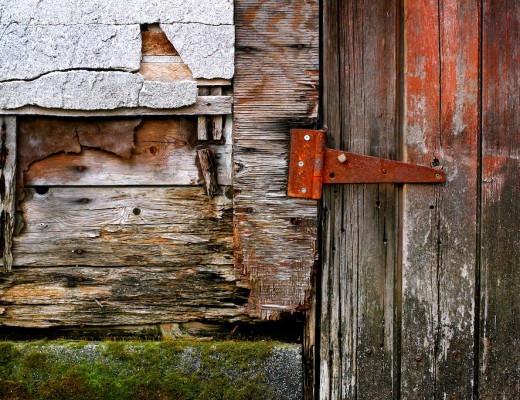
Lurking around every corner is texture. You may not notice them upon first glance, but if you take a closer peek in the crooks and crannies of your neighbourhood, you will find a whole world of excellent textures to capture: Mossy rocks, rotting wooden fences, rusty hinges, chipped paint on window sills, and corrugated metal doors. It’s out there just waiting for you to shoot! And unlike people and animals, mossy rocks sit still for hours with little to no complaints.

You’ll want to shoot in the early morning or during magic hour (one hour before sunset) to get the best light for showing texture. Great light will help define the surface texture and bring out all the little details. Get up really close with a macro lens and magnify the subtle flaws of the texture. Or conversely, look for patterns in the flow in the texture on a larger scale. Think of the patterns created by hundreds of roof shingles, or miles of rippled sand.

If the texture is part of a larger scene like the rippled sand, try shooting a wider frame like the shot below. The contrast of the different textures makes the photo dynamic. Framing contrasting textures together, i.e., blades of grass breaking through a heavy concrete wall, can also provide an extra thematic layer to your photos. You know, struggle against oppressors and the environment and sustainability and serious stuff like that.

Even if you don’t see the covert symbolism, somebody smart will. When they tell you, just nod, smugly smile and say, “Mmm. Yes, that was exactly what I was trying to capture. Not many people catch that.” Even if it’s not true, it’s a double win. You seem like a deep artist for actually creating something with meaning, and they feel like an intellectual “art critique” for having their thematic analysis affirmed.

Textured: Rusty
50mm, f/2.8, 1/80, ISO 100.

PS. Don’t be afraid of trying different angles, especially low ones, using different lenses, and experimenting with composition.

Share your best textured picts or stories in the comments.

5 Photography Projects for Rainy Days

Nov 2 2008

Posted on TWiP.

Fall is slowly fading away. The days are short, wet & cold, and the sky is one shade of monotonous grey. I don’t know about you, but I feel like completely hibernating.

Here are 5 photography projects to keep you inspired during the cold, soggy, rainy days:

1. Put your rubber boots on and grab some dewy macros.

abstract of a large leaf with raindrops
50mm. f/1.4, 1/320, ISO 200.

Now is the perfect time to get raindrop covered plant life shots for your portfolio. The light is nice and soft on cloudy days, so you’ll get even light on your subject. Don’t be afraid of getting up close and trying multiple angles. Keep shooting until you find the best angle that makes those raindrops sparkle.

You’ll want to shoot with your Aperture wide open, so you can keep your ISO low and get loads of delicious bokeh. Bring your tripod along just in case you need some steadying. And wear some rubber boots, because you’ll probably be crouching in a huge puddle o’ mud the entire time!

2. Wait for that perfect moody winter sunset.

W. 4th Ave, Kitsilano, Vancouver
18mm, f/5.6, 1/15, ISO 400.

Even on cloudy days the sun can make a brief apperance. And when it does, it’s usually spectacular. If you see the sun start to peak through the clouds during magic hour (1 hour before sunset), bundle up and head out to great landscape location. Winter skies are rich with colour. Add some thick clouds and you’ve got a great shot. There is nothing more magical than sun rays beaming through a dark and moody sky.

3. Get creative with strobes.

Apple Hype Monster

Get that flash off your camera and grab some gels and get creative. Set up a little studio in a corner of your place and shoot some stills with character. Check out Strobist for the 411 on off-camera flashes and cheap DIY projects to keep you inspired and busy on a gloomy day.

4. Set-up some stills on your window sills.

Breakfast Croissants at the Angel, Bury St. Edmunds, Suffolk, UK
50mm, f/1.8, 1/80, ISO 400.

If you don’t have flashes or triggers, no fear! Make use of the lovely diffused light coming through your living room windows and snap a still shot of your tea time snacks, little toys, your little sister, sea monkeys, or whatever strikes your fancy. You probably want to set up a bounce or white board opposite the window to get some light on the subject.

5. Find hidden gems in your old photos.

bowl of colourful cufflinks
50mm, f/2, 1/125, ISO 200.

Get a big cuppa tea and look though your old photos. As you go, mark or star the photos you think have promise. After you’ve gone through once, go back and pull your top ranked photos into a photo editor (LR, PS, Aperture) and really work on them. A little cropping, sharpening, saturating, some layers and masks and voila! Great shot. You never know what amazing shots are hiding in your archives.

If all else fails, just hunker down in your bed with a stack of DVDs and call it a day.

Learn How to Use Ur Camera

Aug 27 2008

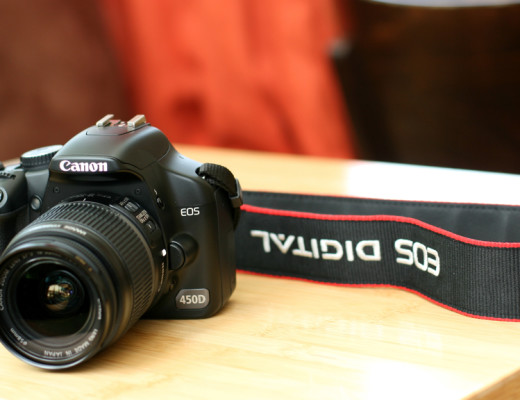
Canon XSi/450D (front)

A lot of people ask me how I take such fantastic pictures. I usually tell them I’m just really talented and obviously have an innate gift for “The Arts”. But because I don’t want to come off as vain, I put this emoticon “:p” at the end. :p

To be honest, I still consider myself quite new to photography and always feel humbled whenever I log into flickr and see the incredible photos people are taking. It seems that order to be a good photographer, you have to constantly learn things, some of them difficult, and be, like, creative all the time. Harsh, I know.

So here I am to help push you to be a better photographer with a super helpful photo tip every week until your photos are awesome, or I get bored of teaching you :p

Here Photo Tip #1: Learn How to Use Your Camera!

1. Read your camera manual!

read your camera manual

I know it’s boring. I didn’t want to read it either, but knowing how to move around your camera insides and outsides is really important. Nothing is more frustrating than fumbling around on your camera in the field. Where is that darn exposure button? How do I delete all pictures? Crud. How do I display the histogram? What are all these numbers and letters on the screen. Ack!

So get a good cuppa tea or coffee (if you prefer that vile stuff) and sit down with your camera and its manual. Go through all the menus and buttons with your camera. Don’t just read it passively, but actively go through every menu setting and button, camera in hand, taking test shots as you go.

I also recommend carrying it in your camera bag if you are a beginner. If you get stuck on something, look it up. Warning: This process may actually lead to learning how to use your camera as more than just an expensive and weighty electronic necklace.

This brings me to my next point…

2. Never use auto settings. Ever.

Auto Robot

I know this is a drastic statement, but trust me on this one, your photos will always look kinda crappy if you use auto settings. That includes the “face” one, the “running man” one, the “mountain” one, the “flower” one, even the “nighttime” or “fireworks” one! Any setting represented by a little cute picture is off limits!

I know that this is a difficult habit to break if you are new to photography. Like most people, I started taking photos on auto settings. After a while, I realized that I had no creative control and I noticed that basic things like focus, exposure, and white balance were all out of wack. Basically, my photos looked subpar and amateur. So I committed a lot of time and effort, and actually learnt stuff about aperture, shutter speed, etc. I know. Crazy.

So repeat after me, “I promise to not use my camera’s default auto setting as a crutch and take control of my photos!”

3. Always set your White Balance


super bad WB! correct WB-1

Nothing looks crappier than photos with incorrect white balance (WB). Your best friend will not appreciate looking like a member of the blue man group on her wedding day. Trust me.

The first thing i do before i take a picture is set the WB. I look around, take a few shots and figure out what the kind of colour temperature I’m dealing with ie. overhead tungsten lights, blinding fluorescents, daylight through a window, etc. and then set the white balance to best match what I see.

If you don’t know what to set the WB to when you are out in the field, then test it using that big screen on the back of your camera that lets you preview photos! Take a few snaps using different WB settings, and decide which best matches the colour of light you see. This may seem tricky, but dicerning between cloudy and sunny isn’t really that tough. And with some practice, you’ll quickly be able to identify trickier things tungsten bulbs and candlelight and mixed light… oh boy.

When you are dealing with a mixed light situation ie., florecent overhead lights, daylight coming in through a big window, use your judgement. What looks the best? Get into the habit of analyzing colour and light and experiment with different WB settings in camera. It’s a really easy thing to do, and will save you a lot of hassle colour correcting in post especially if you haven’t mastered Photoshop, Lightroom, Aperture, or “computers” in general.

To learn more, read this article.

That concludes my lecture for today. Give your camera some extra love this week and take a stack of awesome photos celebrating this last week of summer. If you live in Vancouver or England, remember to bring your umbrella!

Thoughts and comments?

Come say Hi on Flickr & stay tuned for next week’s awesome tip!