Posts Tagged ‘mostly photo tips’

6 New Year’s Resolutions Every Photographer Should Make in 2012

Jan 1 2012

Happy New Year Everyone! Every year I vow to become a better photographer. Last year I set some pretty lofty New Year’s resolutions for myself. This year I have very different plans that involve a little bit of travel — watch for an exciting announcement coming very soon ;) In the meantime, here are a few photography and life resolutions that I hope will help you on your quest to becoming a great photographer!

1. I will learn how to use my gear.

15mm fisheye in Times Square. Photo by Scott Meinzer.

This is a resolution that everyone should commit to. If you don’t know how to use your gear, you will never get constant photos. Anyone can capture a happy accident on Auto, but a good photographer knows how take well-exposed, composed shots in any lighting situation. Moments happen so quickly that if you can’t react almost instantaneously, you’ll always be a few seconds behind that perfect shot.

Bay Bridge at Sunrise, San Francisco

Sunrise over the Bay Bridge in San Francisco.

If you are a beginner, I recommend reading your camera manual cover to cover. It’s tedious, but knowing the button to switch on live view or how to change your picture quality settings to RAW is important. Every time you get a new piece of gear, it’s wise to read the manual. I recently got a new flash and didn’t read the manual before doing a shoot. “How different could it be from my last flash,” I foolishly thought. Apparently, it was different enough that it made me delay a shoot for 30 minutes while I figured out how to detach my new flash from my camera. Fail.

2. I will practice my technical skills.

Parliament Buildings, Victoria, BC

HDR of the Parliament buildings in Victoria, BC.

Once you’ve mastered how to use your camera, then it’s all about practising using it. Most of us start shooting without any previous knowledge about photography. Taking snap shots of your family vacation is very different from shooting a fashion shoot. I’ve taken photos since I was about 5 years old, but I didn’t become aware of composition and lighting until about 4 years ago when I got my first dSLR. I initially shunned spending time learning photographic technique, thinking that my natural ability would just carry me through until I magically learnt technical skills.

I was fine shooting random landscapes and some “casual” portrait sessions, but when I was hired to shoot someone’s wedding with rented gear I’d never used I was way out of my depth. I mistakenly thought that if I rented tons of professional gear, I’d just get great shots by pressing the shutter button. How very, very wrong I was. Firstly, I didn’t know how to use the gear and secondly, I had no clue how to deal with the extreme lighting conditions of shooting a wedding, like direct sun, dark banquet halls, and fluorescent change rooms. At the time, I didn’t even know how to identify different light.

Pink Rose.

Rose macro shot at f/2.8.

While you can learn a lot about how to take great shots by doing, there is no substitute for knowing the actual technical skills necessary to take consistent shots. I’m not saying you have to know the math behind different f-stops, but you should know what an f-number is and that f/2 gives you a shallower depth of field than f/8 and when you should use one versus the other. All of this information is available online. It’s just a few Google searches away.

3. I will take more pictures.

Epic clouds at Disneyland shot with an iPhone 4 & Camera+.

I take about 200 photos a day on average. These days, I spend most of my time shooting with my iPhone. Regardless of what I’m doing or how busy I am I take photos. I’ll take photos of my wait in the Starbucks line, or my morning bagel, or my feet at a dentist appointment. I annoy my friends and family taking pictures of them everyday. While these photos are a documentary of my daily life, I’d say that about 99% of these shots would be considered rubbish to the outside artistic world. But, the other 1% are actually considered good photos that people might want to buy and stick on their wall.

The simple fact that I take so many photos, gives me way better odds that one of my photos will be great. The one thing I notice most about beginner photographers is how few photos they take. I would say the ratio of crap to good shots is about 30:1. We live in a digital age, where data is cheap, so there is no limit on how many shots you can take. Fill up your memory card, take 20 shots of a single piece of grass making sure the focus is tack sharp and the exposure is perfect.

4. I will not be limited by the gear I own.

Times Square October Snow Storm

Times Square shot with an iPhone 4S using Camera+ CrossProcess FX.

Any camera can take a great picture. You can shoot a magazine cover with an iPhone or an award winning photo on a $10 plastic point and shoot. Never feel inferior to other photographers because they are sporting a $10,000 lens. When I first started shooting professionally, I shot with an entry-level Canon Rebel and one lens. Early on, I was invited to cover a nature photography workshop in Jackson Hole. Everyone had a giant luggage bag full of the very best gear money could buy, and I was there with my tiny Rebel and a $19 tripod. The other photographers joked about my crappy tripod and the fact that I was shooting a dramatic landscape with a 50mm lens. “You really can’t get nature shots without spending a bajillion dollars on this camera and this lens and this Gitzo carbon fibre tripod. Feel how light it is!”

I felt horrible. I confided about how I felt to Steve Simon, a legendary documentary photographer and one of the mentors at the workshop without a ton of gear. During the workshop, Steve toted around his Nikon and one lens in a small canvas shoulder bag. He didn’t shoot the landscapes, but instead focused on the people taking the photos. He was interested in the faces and the moments, rather than the landscape that had been shot a million times by Ansel Adams. Steve taught me that you don’t have to be limited by your gear, but rather shift your focus to what your gear is best at capturing. If you really need that $2500 70-200mm IS L lens, you can always rent it for $30.

5. I will learn to edit my photos and critique my own photos.

I get a lot of emails from people asking me to critique their photos. I’m always happy to help guide new photographers in the right direction, but ultimately it’s up to you to learn how to critique your own photos. Photography is art and the judgement of art is relative. I prefer photographs that are “pretty” with bright colours, beautiful models, sunsets, magic hour light, and bokeh. If you presented me with a photo of a gorgeous model on a beach with warm glowing light and a pile of stunning bokeh, I’d totally fave it. But that is just me and what I like. Some people think my style of photography is trite and unrealistic, preferring raw, gritty black and white images of street scenes.

Almost anyone can tell you whether a photograph is composed and exposed well, but does it capture a meaningful moment, does it say something about the world, does it present a new concept or change the way I feel someone feels about a subject? It’s up to you to decide what your answers and and present them in your own personal photographic style.

Once you’ve decided on a style, don’t let anyone shake your vision. People will inevitably disagree with your style, say mean things about your photos, and tell you how your photos would be much better if you did things their way. I get feedback like this almost daily. Almost every photographer I know, even the amazing, Trey Ratcliff of Stuck in Customs does. Unless someone I really respect gives me meaningful criticism, I ignore the noise.

6. I will not give up on a potentially great shot

Santa Monica Pier Sunset

Persistence was the key to this shot of the Santa Monica Pier.

Sometimes a great shot is snapped in seconds, other times it takes 4 long hours of freezing your butt off. I can relate to feeling tired, cold, sore, and frustrated as a photographer, but if there is anything I have learnt over the years, it’s never walk away from a potentially great shot. Odds are that if you just wait longer or try harder, you will get the shot, especially if you have right conditions for a great shot like billowing clouds, magic light, or a gorgeous subject.

Never say, “I’ll just come back tomorrow” or “I’ll get that shot later”. You never will. Persevere through your sore neck, cold feet, and frustration and get that shot now, especially if you are traveling. I have never regretted staying an extra two hours to get a magical shots. I have always painfully regretted not stopping to get a shot, but I never regret staying to the bitter end of a glorious sunset to get a perfect shot.

California Poppies shot with an iPhone 4S & Camera+’s Magic Hour FX.

Now I just shoot until I can’t shoot anymore. I stop the car and jump out and shoot when I see a rainbow. Always think, “this is my only opportunity to get this shot,” so make sure I nail it before I leave.

Whether you are taking your very first photo in 2012 or your 50,000th, I encourage everyone to keep taking photos and sharing them. Adventure out into the world more this year and don’t stop believing in yourself and your photography. Quick, grab your camera – there are amazing photos out there just waiting to be captured!

How to take beautiful Christmas tree bokeh shots

Dec 15 2011

Happy Holidays Bokehlicious Mickey Ears

Happy Holidays!!

One of my favourite parts about the holidays is taking pictures of the sparkly decorations on the tree.  I thought I would share some tips on how to take great ornament photos with beautiful bokeh, those lovely blurred circle light points in the background.

Bokeh is determined by the focal length of your camera, the distance from your camera to the subject, the distance from your subject to the background, and your aperture.

Technically, the best bokeh is achieved with a long lens (85mm and up) with a wide aperture (under f/3.0) with a short focal distance from the subject and long focal distance from the subject and background where the light points are.

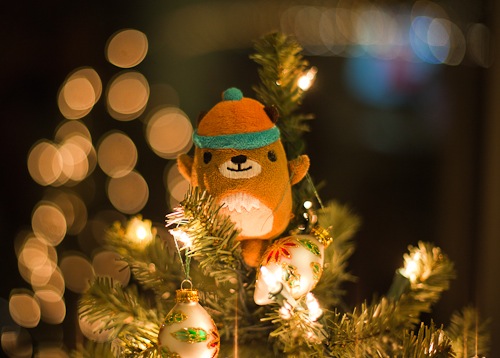
For the Mickey Mouse shot, I mounted my camera on a tripod, so it was easier to focus and not get camera shake or noise from using a high ISO. I placed my little tree about 2 feet in front of a window. When it was dark the lights reflected against the window giving me huge bokeh lights. I placed the Mickey Ears on the side of the tree near the back so that I had about a third of the tree in the frame and the rest was black with the reflected bokeh circles.

I actually lit Mickey a bit by pointing the led lights on the tree towards him. This is obviously a lot easier on a fake tree than a real tree :P I used a 100mm macro lens so I could get up really close Mickey and set my aperture to f/2.8 to get enormous bokeh lights. I exposed for Mickey, while making sure I didn’t blow out the led lights on the tree too much.

Here is an example of the same ornament set up with different lenses set at their widest aperture. As you can see the longer the lens creates larger bokeh. But each set up creates a neat effect. If you are shooting with a wider angled lens, I suggest clumping more lights together for more wow!

This makes a fun photography project for a chilly winter day that your whole family can enjoy. So gather up all the shutterbugs in your house and snap your favourite decorations. Remember to share your favourites when you are done!

8 Things to Inspire You to Keep Shooting & Sharing Your Photography

Aug 5 2010

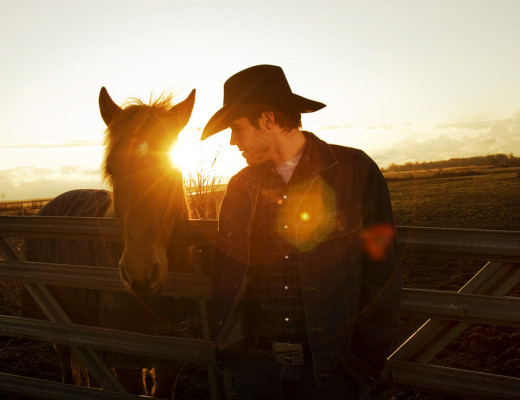
Barry the Cowboy & Jesse the horse

I shot this image of a silhouetted cowboy and a horse at sunset over a year ago. At the time thought is was kind of cool, so I shared it on Flickr. A year later, I received an email from Penguin saying they’d found my image on Flickr and would like to use it for the cover of a new book! Yesterday, a cheque in the mail arrived. It’s my very first book cover!

What shocked me was that somebody actually paid me real money for a experimental shot that I took for fun and for free. I wanted to share this story with you because it really hammered home some really important points about the nature of the photography business in this new digital and social age and all the things that are possible for someone with no training, little money, and a strong passion for taking great photos.

  1. You can get great shots with any camera: I shot this with my trusty Canon Rebel Xti (400D) with a basic kit lens. The quality was good enough to print. Never let your gear limit you, instead learn to master what you’ve got and try to the best possible images you can.
  2. Even iPhone shots are good enough to print: We are seeing more and more publications accept images shot with an iPhone. The most recent MacWorld Cover was shot with an iPhone 4. F-Stoppers shot an entire fashion shoot with a 3GS. Additionally, when I was reporting on the 2010 Olympics for the Vancouver newspaper, The Province, they posted an iPhone 3G photo taken of me and a very large fry on the front page of the paper. They continued to use my iPhone shots in the paper many times.
  3. The more you shoot, the more you learn, the better you get: I feel like I’ve come a long way since that cowboy shoot and if it weren’t for that photo session and the many sessions after that, I wouldn’t be able to take the shots I take now. I honestly didn’t have a clue how to do anything technical when I started out. I often made big mistakes and took crummy photos. Instead of feeling bad when you take a poor photo, analyze it and try to figure out why it’s poor and how you can improve your skills for next time.
  4. Most learning happens by “just doing it”: I haven’t taken a single photography class or read a photography related book cover to cover. I learnt everything I know by doing and doing until I got it right. When I couldn’t figure something out something technical, I’d call other photographers, connect on Flickr, or dive into Strobist for a week.
  5. Other photographers are your greatest allies: Whenever I meet another photographer like Ken (pictured on left) and Scott (right), I completely barrage them with questions about gear, lighting, techniques, etc. I find most photographers are completely open to sharing information and are wonderful shoulders to cry on when you are lacking inspiration. You can meet tons of photogs on Twitter, Flickr, and Facebook. Share your ideas, go for photo walks and garner inspiration from them.
  6. Believe in yourself and your photographic abilities: We all have bad days, unproductive days, but it’s the people that keep plodding through the difficult times that end up succeeding. I’m very hard on myself and my photography, and sometimes I’ve completely abandoned it for months because I didn’t feel like my shots were good enough. Now, if I’m having a bad day with my 5DMKII, I’ll switch things up and shoot with my iPhone. I find by taking the pressure off and just shooting for fun, I can overcome a lot of my self-critical negativity. At the end of the day, we shoot because we love photography, not to create perfect images.
  7. Share your photos: If I hadn’t uploaded that cowboy photo to Flickr, Penguin would have never found it. It’s that simple. The greater distribution your photos have, the more people will see them and the greater opportunities you have to publish or sell your images. So start sharing your shots! Plus, it really helps to have others both praise and criticize your work.
  8. You can make money with your photography: It’s not easy, but it’s definitely within your grasp. I did it with no training, just hard work and perseverance and so can you! I’m going to do an expanded post on this topic soon, because I know what a battle it is to get paid for professional photography work when everyone’s Uncle Jim considers themselves a Pro photographer.

Until then start with Step One: Get out and shoot. Step Two: Share your photos! I want to see everyone posting pictures on Twitter, Flickr, Facebook, Tumblr & their blogs. Can’t wait to see your shots!!

Mostly Lisa Photo of the Week Contest: Beach Photos

Jul 10 2010

Since it’s summertime, I thought I’d do a video tutorial this week on how to take great beach photos with your iPhone since dSLRs don’t seem to like sand and water too much :(

This week’s contest theme: Beach Photos

The second contest’s theme is beach photos. Any images taken on or near a beach will be considered for the contest. Photos must be taken with the iPhone using the Camera+ app.

Here are the contest details:

1. Follow me, @mostlylisa on Twitter.
2. Share your photos on Twitter using the Camera+ Share button and include the hashtag #MLPhotoContest in your tweet so we can find you.
3. The contest ends July 15th, 2010 at midnight EDT.

There is no restriction to the number of entries, so feel free to enter as many times as you like! I will announce the winner on Friday, July 16th, 2010.

This week’s winner will receive a $100 iTunes Gift Certificate.

Congratulations to last week’s winner Kalle Oksa for his awesome Kullaberg landscape shot.

6 Bad Photos & What I Learned from Them

Jun 1 2010

*early morning dreams*A little good, before I present all the bad…

I’m doing a bit of digital spring cleaning today, starting with my library of photos in Lightroom. During my cleaning, I noticed all the crummy photos I’ve taken over the last few years. After feeling mildly embarrassed, I realized how much I’ve actually learned about photography, simply from taking bad photos.

So, I’m going to do something that I’ve never done, share some of my worst photos (eek) and the lessons I learned from them.

1. Learn to focus your camera manually.

Both focus and composition were not my friend in this picture.

Focusing is one of the most basic photography skills, yet it seems to be the most difficult to master. When I started I relied completely on Auto Focus, which rarely, if ever, worked in low light and back lit situations.

Because of this dependance I spent most of my time during shoots waiting for my camera to grab focus, then actually taking shots. Since I’ve been shooting a lot more video with the 5DMKII, I’ve had to master manual focus. Now, I find my eye is a lot more reliable than auto focus.

2. Learn to expose your pictures correctly.


Ouch, this photo is blinding me!

Nothing you do in post will save an overexposed picture. You cannot recover information that isn’t there to start with, so turn on your histogram and watch out for “blinkies”. Highlight warning flashes on your histogram let you know which parts of your photo are overexposed.

This is particularly useful when you are outside on a sunny day and can’t see your camera’s LCD screen very well. Look in your camera manual for Highlight warning and it should tell you how to set this feature up on your camera.

3. Don’t crop off body parts.

I haz no fingurz!

This would be a good photo except for her missing fingers and elbow… Doh! In going through my old shots, I noticed many shots where I cropped out a lovely model’s foot, chin, arm, or leg. Even your most creative editing job will not save a photo of  model with a missing chin.

(more…)

5 Ways to Fall in Love with Photography Again

Apr 27 2010

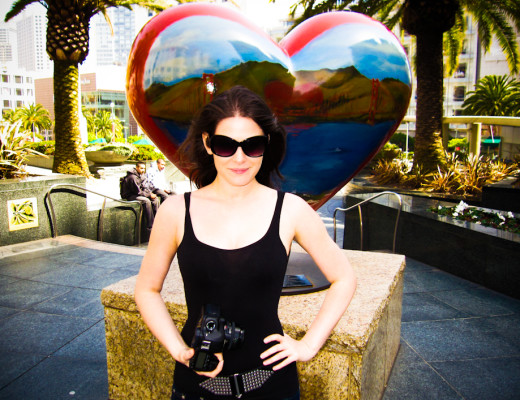
Lisa with SF Heart in Union Square

I’m back from a quick trip to San Francisco. Although I brought my 5DMKII, I actually spent most of my time shooting with my iPhone. I found myself really enjoying snapping hundreds of pictures with wild abandon, shooting things I would have never “wasted” shots on with my 5DMKII.

This experience was a valuable reminder of what I love about photography: The act of taking pictures. The sheer joy of capturing a moment is such a powerful feeling as a photographer and one that I’ve been missing in recent months.


Team Cheer at the SF Heart, Union Square, SF.

I find that many photographers, especially the perfectionists among us, feel a huge pressure when it comes to their photography. Gaining good editing and photoshop skills, as well as pushing yourself creatively is an important part of becoming a better photographer, but when you start feeling perpetually unsatisfied with every picture you take, you start to lose the passion and love for the thing you love to do.

I’ve noticed this with my attitude towards my own photography, so I thought I’d share some tips to help you generate a little bit of heat between you and your camera.

1. Fill up your memory card.

Union Square, SF, iPhone.

Never limit the number of shots you take based on digital space, just line your pockets with memory cards :) Memory is cheap. Buy plenty of memory cards and don’t be scared of filling up your cards. I carry 2x8GB, 2x4GB, & 2x2GB CFs plus 2x8GB SD cards for my P&S with me all the time.

(more…)

5 Tips for Taking Better Event Photos

Mar 24 2010

Go Go Bobsled Go!
5DMKII +16-35mm f/2.8, 1/125 @ f/6.3, ISO 200.

Most photographers start their photographic journey taking photos at special events. Whether it’s a football game, a family wedding, or a rock concert, capturing the raw, spontaneous moments of these events is something all photographers aim to do.

A few weeks ago, I had the rare opportunity to photograph the Olympics in my home town. The action was happening outside my window 24 hours a day for 17 days, and as you can imagine I felt both elated and overwhelmed at the same time.

Besides learning to pace myself and charge batteries each night, I learnt some valuable lessons. Here are my top 5 tips to taking better event photos:

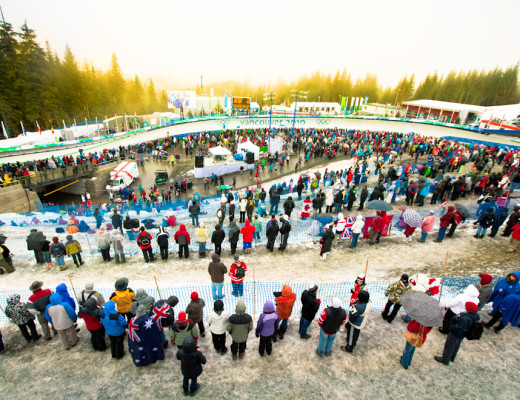
Bobsledding venue 2010 Olympics
5DMKII +16-35mm f/2.8, 1/80 @ f/4.5, ISO 100.

1. Know what you are going to shoot before shoot it.

50% of event photography is preparation. Before you even leave the house, visualize what shots you want to take. Seems like overkill, but if you only get a few seconds chance to capture a bride walking down the aisle or a few one hundredths of a second to catch a speeding bobsled on the track, so you have to make your shots count.

I recommend writing down a shot list (e.g., wide shot of the bobsledding venue, close-up shot of some passionate fans, shot of speeding bobsled etc.) and even sketch out the important shots you want to take. If you don’t know where to start, search Flickr and the web for shots that people are taking of the event have taken at a similar event in the past.

Me & my 5DMKII at the Olympics!
Photo by Scott Meinzer. Me & my 5DMKII + 70-200mm f/2.8.

2. Bring the right lenses

Now that you’ve got your shot list and have an idea of what you plan on shooting, you can choose the right lenses for the job. Ideally, you want cover all your bases with a wide, mid, and telephoto lens. If you lucky to have these options then use them. And no wining about how heavy your lenses are! If you are like me and only own a few mid range lenses, consider renting a wide angle lens like the 16-35mm f/2.8 and a mid-range telephoto lens like the 70-200mm f/2.8 IS.

If you are working with a standard 18-55mm kit lens, you’ve got your wide and mid-ranges covered, but fall short on long distance zoom. You might want to bring along your point and shoot for zoom shots, or just focus on the action you can capture.


This flimsy umbrella will protect me from anything! Maybe not. :(

3. Prepare for bad weather — rain, snow, hail, world-wide apocalypse etc.

Inevitably, if you are shooting outside, it will rain, sleet, hail, or fireballs will fall from the sky. If you are unprepared, bad weather can ruin your gear, your shots, and your shoes. I learnt this the hard way when I had to trek through the slush, snow & mud at the bobsled event in tight jeans and Ugg boots with a floppy canvas bag. By mid-day I had 4 inches of freezing, dirty water in my boots and my photo bag was drenched. Luckily my 5DMKII and the 16-35mm f/2.8 were water-tight, though I did get some crazy condensation in my view finder.

Not that you’d make this same n00b fashion error, but taking a few moments to weather proof your gear and your feet is always a good idea.

Most camera bags offer some kind of water protection, but none are completely waterproof. If you want ultimate water protection, you’ll have to cart around a pelican case. Just to be safe, I always carry a spare plastic bag that fits over my camera bag just in case I get caught in a thunder storm. Smaller cameras can be sealed in plastic ziplock bags. An umbrella can be used to shield your camera when you are changing lenses and works well in snowy conditions as well.

4. Capture the story of the event

Every event has a beginning, middle, and end. Try to capture the entire story of the event. Take pictures of the empty venue and snap shots as people arrive. Show the full scale of the event. During the main event, set your camera to burst mode and shoot as many shots as you can. Bring a lot amount of memory cards. Never let space dictate how many shots you should take.

Set your camera to burst mode and concentrate on capturing the reaction of the audience, as well as the main action. Reaction shots are priceless and often capture the emotion of the event better than the actual event.

5. Get as close as you can to the action

You are never going to get those pure visceral shots if you shoot like a shrinking violet. Watching professional sports photographers at the Olympics made me realize that you really have to get close to the action to get great shots. Even with huge zoom lenses, they parked themselves right against the bobsled track, elbowing their way in, and constantly moved around to get the best shot.

During the Olympics I shot wherever I wanted to shoot without concern for whether it was “allowed” or not. In the past I’ve been so worried about getting in trouble that I’ve missed excellent shooting opportunities. I honestly think the best policy is shoot fast and furious until the cops show up.

Russian Flag

5MKII + 16-35mm f/2.8, 1/320 @ f/5.0 ISO 250.

Many people were surprised that I was able to get so close to the bobsled track when I captured this footage of the USA-2 bobsled crash. I happened to be in the right place at the right time, but I had to really stand my ground when other photographers started trying to push in.

Share your comments & tips below!

Mostly Lisa’s Guide to Photographing Models

Sep 12 2008

Lisa Bettany (MostlyLisa.com)
Photo by Redpilot Media.

The move from photographing Whiskers, the neighbourhood cat to Bianca, the 17-year-old leggy Italian model can be traumatic for both you and Whiskers. That didn’t make sense. I digress…

I’m not sure why people love shots of scantily clad female models. I find the subtleties of the western marmot’s feeding pattern a lot more interesting, but I’m guessing most of you will disagree with me. That’s why as a photographer /slash/ model who has experienced enough horror photo shoots to fill a pretty hardy paperback, I feel that it is my duty to inform you of some basic tips to help you take awesome model shots and avoid embarrassing, and often times, permanently scarring, photo shoots.

1. Hire a professional model.

Your girlfriend may be lovely, but unless she is a trained model, your shots will always look amateurish. Plus, asking your sweetie to pad her bra with tissues, suck in her gut, and angle herself so her butt doesn’t look huge, will never lead to relationship bliss.

If you are just starting out, then grab all your modelish friends, by all means, but modeling actually involves skill and if you want to take your shots from “Oh that’s really pretty” to “BAM! That could be in a fashion magazine”, you need a professional model.

What to do: Start by developing a relationship with a local modeling agency and offer to do a few “test shoots” with their up & coming models for free or a small fee. Beginning models will jump at this because they need to fill their portfolio as quickly and cheaply as possible. Because of my schister of an agent, my first test shoot cost me $900. Exactly. So if you take awesome shots and don’t act like a giant douche, then you’ll quickly move up the ranks and will be able to work with the more experienced models.

2. Hire a good makeup artist.

Details matter in this industry and bad makeup and hair can ruin your pictures. Unless you are a PS pro and can make Rosie O’Donnell look like Gisele Bündchen, then you need to get it right when you shoot. And if you are like most photographers you might not be completely in the know when it comes to picking the perfect shade of lipstick.

Oh I dunno, I much prefer “Innocent Starlet” to “Sassy Schoolgirl Scarlet”. I bet you didn’t even know lipstick had such lame and sexually stereotyped names did you? Exactly. That’s why you need a makeup artist.

What to do: Well, first don’t go down to your local department store and hire the first overly perfumed Chanel girl with black nail polished finger nails. Trust me. I mean really trust me. Not a good idea. Hire a proper makeup artist from an agency or professional salon. This will probably cost about $40. It’s worth it. If you don’t have the coin, check out the recent grads a professional makeup school, they are usually willing to do makeup for free for a print for their portfolio.

3. Hire a photo assistant.

No model will be impressed when you hand them a huge pelican full o’ gear and ask her to lug it over beached logs and heaps of sand. Trust me, it’s in your best interest to keep your model’s hair and makeup as fresh as possible. And that ain’t gonna happen if she’s truckin’ all your gear half way across the desert.

Ditto with holding the bounce. It’s awkward enough jamming yourself into crazy poses, let alone trying to hit those wacky poses while holding a huge white board in front of your face. Plus, if you are dealing with umbrellas and flashes and heaps of pricy gear, you’re gonna want to keep your photo gear protected from the elements, both weather and thieving humans.

What to do: If you don’t have the funds to pay for a qualified photography assistant, ask at local photography schools for someone willing to assist for free, or wrangle one of your friends or the model’s friend to help. Also, check out the bulletin boards at local camera stores. There are heaps of biz cards that might lead you to a good helper.

4. Don’t be creepy. Period.

Photogs who frequently hound models to drop their bikini tops, even in jest, get bad reputations with models and their agents. There are a lot of really awkward situations between a model and a photographer, i.e. changing clothes on a beach.

What to do: If you have a female assistant, ask her to hold a towel over the model or suggest that she changes in your car if it’s available. If none of these options are doable, make sure you bring a large towel, XXXL tee, or robe for the model to change in and make sure you keep your eyes in the opposite direction.

Also, be careful how and what you say when directing your model to move parts of her girly anatomy. “Hey darling, give your tits some love will you, I need perky perky for this shot!” And before you ask, yes someone said that to me. One more point, asking the model out after the shoot? Yeah. Not so much Creeperson.

5. Bring these things to photo shoots:

Bottled water to keep her hydrated. A snack if it’s a long shoot. Fainting models aren’t the funnest <– (yeah Steve Jobs, funnest.). A long puffy jacket or bath robe to keep her from freezing. A towel or blanket for her to sit on between set-ups. A water spray bottle to wet hair in the case of wind or to get that sexy dewy wet look. Hair spray because she will always forget and fly aways are PS hell. A lipstick or sample from the makeup artist so you can do touch ups during the shoot.

There you go! You’re on your way to become a photographer models love to shoot with and not that jerk she calls Pervy McPerverson to all her gossipy model friends.

Questions/Comments?

Oh and if you’ve had any model photo shoot horror stories, you know I want to hear them.