Posts Tagged ‘Featured’

How to get your photos Explored on Flickr

Apr 18 2009

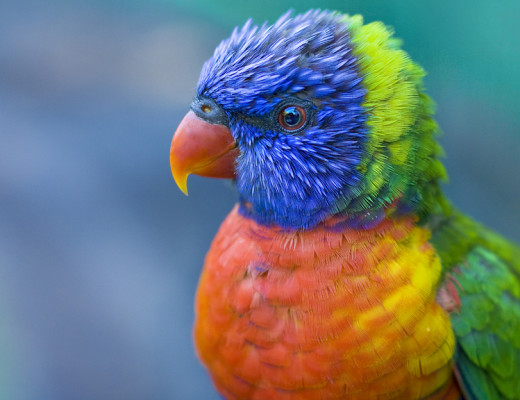
Rainbow LorikeetThis Rainbow Lorikeet let Front Page Explore go straight to it’s little head.

Explore is Flickr’s Daily Artist Showcase. Every day Flickr admins choose 500 of the most interesting images determined by “interestingness”.

Being chosen as one of these elite few can mean a huge increase in your photo’s views and the number of comments and favourites you receive. Land on the front page of Explore, Flickr’s home page, and magical things happen, all of which having to do with increasing your ego, none of which actually leads to earning money as a photographer. But who cares, when you are royalty on Flickr for a day. :P

I’ll admit to feeling proud like a peacock when my mum first spotted my photo on the Explore home page. Within minutes, the comments and praise flooded in from the Flickratic. I began to pump out more quality shots and I continued getting Explored. I felt like my photography was finally reaching people. It was a great feeling, like a really perfect high-five or winning cookies. It also pushed me to try new techniques and really perfect my images before putting them up on Flickr.

A lot of people have asked me if there is any secret to getting Explored. The most obvious thing is take a great photo. But, beyond a great shot, there seems to be a definite pattern in which photos get Explored. After all, photography is art and the personal taste of the Flickr admins does impact the photos that are chosen. Using my keen intellect and the power of the internet, I have compiled a list of power tips on how to get your photos Explored and because I’ve been a lazy, good-for-nuthin’ blogger as of late, I’m going to share these with you.

Here are my top secret tips for getting your photos Explored on Flickr:

1. Mo’ Bokeh

Through the The MistBokeh of street lights created with a LensBaby and the star shaped Creative Aperture disk.

By far the most popular type of bokeh photos on Flickr is that derived from taking out of focus pictures of small clusters lights, like on a Christmas tree. If you haven’t heard, the phrase Bokeh, “a photographic term referring to the appearance of point of light sources in an out-of-focus area of an image produced by a camera lens using a shallow depth of field”, then you probably haven’t been on Flickr for very long – because people are nuts about bokeh. Those little out-of-focus orbs of goodness can give a photo a magical, almost surreal quality. And the hip Flickratti are pumping it out faster than you can say, “Ashton killed twitter”. I mean… ahem. What?

How to get this shot:
Crossing your eyes is the easiest way to find cool bokeh. Snicker as you may, but seriously try it the next time you are out at night on a street with street lamps, stop lights, restaurant twinkle lights. Practice this technique in moderation and definitely not in combination with making a funny face because that would seem unprofessional and may weird people out.

Once you’ve found a cool bokeh source like a row of street lights, set your camera’s aperture wide open (>f/3.0) or >f/3.0, >f/5.6 if it’s a telephoto focal length (ie. 200mm at f/5.6) and set your lens to manual. Now pull it almost completely out-of-focus until you see nice fuzzy bits. That the good stuff. Now snap!

Shaped bokeh i.e., stars, hearts, is also really hot right now and companies like LensBaby are making it really easy to do with inexpensive Creative Aperture Kits. If you can’t afford a LensBaby ($100-$270), you can even make your own bokeh shaper lens hood with some black paperboard.

2. Lens Flare

Brisbane EyeLens Flare of sunlight streaming through Brisbane Eye Ferris Wheel.

I love lens flare, Michael Bay loves lens flare & so does Flickr. Go ahead. Break all the rules and point your camera at the sun. Within reason of course. Like don’t burn your eyes out or anything. Aim to head out during magic hour (1 hour before sunset) when the sun is low and golden and play with different angles of flares. Also, make sure you’ve got a UV filter so you aren’t damaging your camera’s lens.

3. Hot Chicks

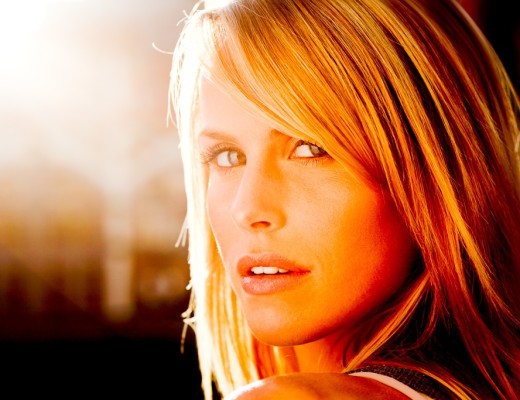
Kylee Epp Promo ShotHot Chick & Musician, Kylee Epp. See behind the scenes shots here.

Like most people, Flickr love pictures of hot chicks. Pretty much any photograph looks better with a hot chick in it. Think about it. A nice still life shot of a bowl of fruit? Boring! A nice still life shot of a bowl of fruit with a hot chick holding a banana? Shizzam! A breathtaking image of a white sand beach? Meh. A breathtaking chick in bikini on a white sand beach? Explored!

It probably won’t surprise you that one of the most commonly explored content is pictures of hot chicks.

More often than not, they are beautiful young photographer/models AKA “modelographers” who have taken their exploration of narcissism to the next level with daily self-portraits called Flickr 365. They are blessed with looks, talent, and a passion for photography, and they are the new power elite on Flickr.

I have to give these young modelographers credit, because they produce near professional quality fashion-esque images of themselves nearly everyday and they are not afraid to try new and creative methods to light, take, and process their images, including film, toy cameras (lomo), strobe. Their photos are edgy, trendy, painful, naked, and oh so indie. They will often get a friend to do makeup or approach young designers whose clothes they or their other young hot chick friends can model. I am constantly amazed and bemused by the sheer number of beautiful images they create and the community wide adoration and respect they receive on Flickr.

How to get this shot:
If you happen to be a young hot chick with a camera, perfect your photography skills by snapping photos of your self and your friends, because the world has never been more open to the idea of a 16-year-old female fashion photographer.

If not, then take a lesson from these young photographers, go out and find someone to model for you, someone hot that looks like they could be in a fashion magazine and all of a sudden your photos go from 2 views to 2, 000 views. Need some tips on finding models I have a post on that :D

4. Cute animals

Lovely Currumbin KoalaLovely Koala taken at the Currumbin Wildlife Sanctuary in QLD, Australia.
If you can’t get a hot chick, a cute animal is your next best bet. Everyone loves a cute animal, especially when it’s displaying seemly human characteristics. Ooh, that’s one angry squirrel! Aww look at those fuzzy ducklings. Ooh, a rare hummingbird!

How to get this shot:
Find cute animals. Pets are a good place to start. Zoos are great. Check your backyard, or the park. Go out and find cuteness. I suggest you take shots of animals at eye-level. Take different angles, use different lenses, get creative with these shots. Take a shot of your pooch’s nose close up with a wide angle. That always looks funny. Flickr loves animals in action, animals with personality, and whimsical cat/dog photos.

5. Soft Flower & Plant life Macros

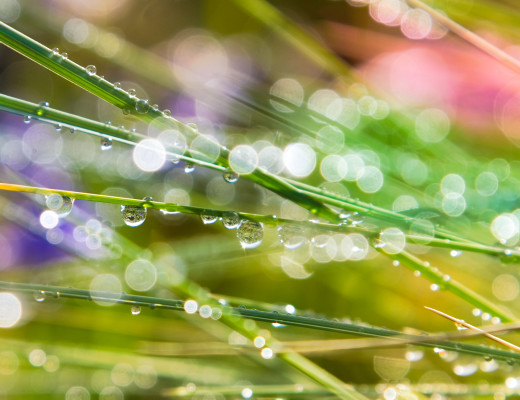
abstract of a large leaf with raindropsLeaf found in Queen Elizabeth Park on a damp Vancouver afternoon.
Flickr loves soft flower & other plant life macros like leaves and stuff. It’s as simple as that.

How to get this shot:
Find some blossom, blooms, pedals, leaves or flowery things. I am quite the botanist, can’t you tell? Choose an interesting angle, probably one where you are lying in mud. Bring a water sprayer and lightly mist the flowers do they are all dewy. Open your aperture up to f/3.5 and lower so you get some nice background bokeh and you are money.

6. Photos with interesting and tragically bohemian titles

FlightI call this, “Oh love you have bewildered me with your absence”.

You won’t just get explored simply for a title. But, it definitely takes the artistic merit of your shot up an notch and will increase your chances of getting noticed. Even if you are not exploding with photo titling talent, anything is better than IMG_9807. Here are some tragically bohemian titles to get you started:

Simple
*broken flight*
insomnia
humble
where’s my freedom?
love is a trap
my peace is gone, my heart is heavy

Ahh, I poke fun, but you get the idea. The point is, there are types of photos that are more likely to be Explored than others, but there is no easy way in. You have to take great shots. And to take a great shot, you have to be out in the world taking shots. Take risks. If you always go on a photo walk to the beach at sunset, go in the opposite direction and take some urban landscapes. If you always snap pictures of your cat Mookie, turn the camera on yourself and do some self-portraits. Keep your work fresh and keep posting your best shots on Flickr and one of these days maybe it will be your shot on the front page of Explore!

Got any tips and tricks or great photos you’ve taken that you’d like to share? Add them in the comments!

6 Quick Tips for Photography on the Fly

Feb 18 2009

Blue Heron Olympus E30 high ISO test
Olympus E30, 70-300mm f/4.0-5.6 lens, 300mm, f/5.6, 1/320, ISO 2000.

Today I went on an impromptu nature photowalk. It was sunny (which it seldom is in Vancouver during winter),  so when the clock hit quarter to magic-hour I was out the door.

I spent most of my time stealthily crouched in a glurpy muddy swamp for about 1 1/2 hours. I was waiting for  this lazy Blue Heron to take off, so I could get the spread-winged money shot. Then I got the dreaded flashing “CARD FULL” message on my screen.  This bird had stayed in the same position for 30mins, so I figured I had time to quietly pop a new card in. The very second I put down my camera to swap cards, the heron flew away into the most perfect pink sky.  Gotta love nature photography.

Lisa's Nature Photography Camouflage
I bet you can’t even find me in this photo, my camouflage gear is so stealth.


(more…)

A Beginner’s Guide to Troubleshooting Light

Jan 28 2009

Ruffled: PIstache the Lorikeet
50mm, f/2.5, 1/160, ISO 400.

I get a lot of emails from beginner photographers who have just purchased their first dSLR and are chomping at the bit to shoot some great photos, but don’t know where to start. Whether you’ve moved from a film SLR or up from a point and shoot camera, the first thing you should do is read your manual! Set aside some time and learn what all those buttons and dials do. It’s lame and confusing I know, but learning how to move around your camera is your first major obstacle to taking great pictures.

One of the most common mistakes I see from beginners is underexposed images taken in low light situations, i.e., poorly lit room, music venue, restaurant, or outside at dusk or night. These photos are often blurry, noisy, dark, or blown-out with an on-camera flash. But don’t fear! Everyone makes these mistakes. The good news is all you have to do is learn a few technical things and you’ll be taking awesome exposures in no time.

Good photographs need good lighting. Achieving good lighting requires a combination of many different skills and tools.

Here are 5 ways you can get better exposures in low light:

1. Increase your aperture.

flower
50mm, f/1.4, 1/125, ISO 200.

The lower the f-number, the more light is let into your camera. I know this seems backwards at first, so play around with your camera’s Av (or Aperture Priority mode). Take shots of one subject with different f-stop setting and you’ll start to understand how aperture can effect your image.

What to watch for: Remember that as you lower your aperture, the Depth of Field (DoF) becomes shallower. Using a nice wide aperture (f/4 or lower, for example) is how you get a nice sharp subject with a blurry background. So if you are shooting with an aperture of f/1.4, you are going to have to nail your area of focus. It’s also good if you know the widest aperture of your lens. For instance, the lens I use the most in low light is the 50mm with a maximum aperture of f/1.4. Just in case you forget, it’s actually written right on your lens!

2. Decrease your shutter speed.

boots
Canon 70-200mm IS, 135mm, f/2.8, 1/80, ISO 200.

This one is a bit easier to remember: The slower your shutter speed, the more light reaches the sensor. For example, 1/30 slower shutter, more light, 1/2500 faster shutter, less light. Easy peasy.

What to watch out for: Unless you are going for some kind of motion blur effect, you probably want your photos to be as crisp and sharp as possible. If you are hand-holding your camera and your shutter speed is too long, you are going to get blurry, shaky photos. To get your hand-held images tack sharp, there is a a good rule of thumb to remember:

The slowest shutter speed that can be used without blur is the shutter speed that is closest to the focal length of the lens that you are using.

Huh? Yeah that did sound confusing. Well, say you are using a 50mm lens, the lowest shutter speed you should use for hand-held shots is 1/50th. Of course, this is only a general guide. You can also push your shutter speed down lower if you steady yourself against a wall, or your camera on a table, or develop some serious Jedi mind-to-hand steadying powers. And if you have a magical money tree, obviously an lens with optical Image Stabilization (IS) will help a lot.

3. Increase your ISO.

farrell

50mm, f/1.4, 1/30, ISO 400

The higher the ISO, the more sensitive your camera’s sensor is to light. If you increase the ISO your photos will appear brighter. Most entry level SLRs can shoot up to ISO 1600. Fancy pants SLRs like the Nikon D3 can get up much higher, like 6400. That’s serious business.

What to watch for: The huge downside to shooting with a high ISO is that your images will appear more grainy and noisy. In my opinion, increasing the ISO should be a last resort for getting a better exposure. Stay as low as possible and try shifting around the aperture and shutter speed before cranking the ISO. Also, learn the limits of your camera. On my little Xti (400D) I can’t shoot over ISO 400 without getting noise, but something like the Canon 5D Mark II is designed to work with high ISO settings with limited noise. Lucky dogs!

4. Use a Tripod.

brizzy
17mm, f/11, 6s, ISO 100.

Tripods are great little devices that steady your shots when light isn’t great. They also allow you to go with the ISO and aperture settings you want. The above image was shot at f/11 for 6s at ISO 100. Without a tripod that shot would have been a big blurry mess.

I know tripods aren’t fun to tote around. Trust me, I know. But, you don’t need a huge, expensive tripod when you are just starting. Just look for something sturdy, light and portable. Well, as portable as a big pointy, metal object can be. You can even find ones that come with little bags for extra portability. Actually, my mum, who is quite the seamstress, made a faux-vinyl tripod bag that works really well. I’m trying to convince her to write a DIY post about it for my blog. Maybe you can convince her.

Another option for a portable tripod is the Joby Gorillapod. These flexible guys have three articulated legs that can bend and wrap around things to shoot from almost anywhere: Rock ledges, tree branches, bike handles, even your head if you’re into that kind of thing.

There are 5 models ranging in size and how much weight they can hold. I suggest the SLR model for larger point and shoots like the G9 or LX3 and entry-level SLRs without a big telephoto lenses, and the SLR-Zoom for SLRs with serious glass. For people getting a bit more serious, any pro will tell you that there are two kinds of tripods: The kind that is cheap and easy to carry around, and the kind that works. I say spend what you can and make it work. A cheap tripod is better than no tripod, and if it’s small and light you’ll probably use it more.

kylee
35mm, f/4, 1/60, ISO 200, on-camera flash.

5. Using the on Camera flash.

Sometimes capturing the moment is the most important thing. I know hard to believe, but some people really need proof that they “hung out” with Wil Weaton at Comic-Con. Isn’t the experience enough? No, gotta share it with all of the internet do you? I have no idea about this compulsion you have. So, set that puppy to ‘Auto’ mode, say a little prayer, and fire away! Here’s hoping for the best.

What to watch for: The trouble with on-camera flash is that it almost never looks good. Just look through some of your Facebook friends’ photo albums (oh low blow): Washed out faces, harsh shadows, awful reflection on glasses, sickly blue colour balance, the list goes on and on. So here’s a few tricks to minimize what I call the “Facebook flash effect”:

  1. Dial down the intensity of the flash. If you’d read the manual, you’d know how to do this :P
  2. Set your white balance to flash.
  3. Tape of small piece of wax paper over the flash to diffuse the light.

With a few simple adjustments and a little bit of knowledge, you have the power to take great shots. I believe in you! So go forth and photograph amazing things!

Need a place to start? Here are some great rainy day photography projects.

Questions, comments, & things to add? I’d love to hear from you.

How to take great portraits of your pets

Dec 12 2008

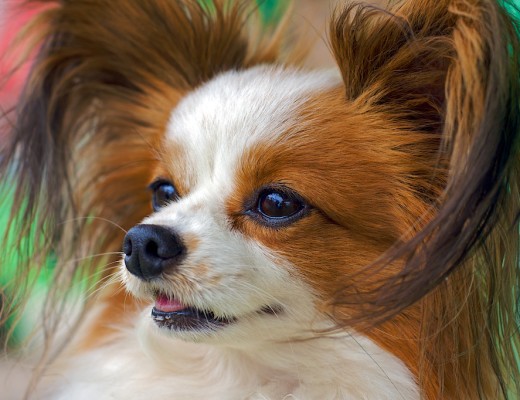
Chip the Papillion
Chip the Papillon. 50mm f/1.4 lens, f/4, 1/400, ISO 200.

1. Snap pets when they are sleepy and happy

Animals generally have somewhat predictable patterns of alertness and sleepiness. Like at 6am, they are usually wide awake. “Yap yap yap! Good Morning! I’m up, why aren’t you? ” Obviously, you don’t want to photograph a pet when they are rocketing around your living room or fast asleep. Try to find a time where they are fed, happy, and partially sleepy. That way they will be patient enough to sit and pose for you. Keep a few little treats in your pockets to keep that “happy-time” glimmer in their eyes or just to give you some extra snapping time.

2. Photograph pets at their eye level

Photos taken of animals from above are less personal and look very observational. If you want to show the personality of your fantastic pet, then you’ll have to shoot them at their eye-level. This often means crouching or lying down in some uncomfortable position in something wet, itchy, or hard, but it’s worth it. If you have smaller pets, you can prop them up on a pillow on a chair to make it a bit easier on your knees.

3. Find a simple, contrasting background

Use a simple background that contrasts with the colour of your pet’s fur, feathers, scales, tentacles (?) A grey cat against a grey wall will not stand out enough. Opt for a lighter colour to make your pet pop from the background.

4. Shoot in soft, even light

Indoors: Shoot in front of a big open window. Use a sheer curtain to diffuse the harsh light if it’s really sunny, or shoot a bit later in the day (about 1 hour before sunset). If you are getting a lot of shadow, use a bounce or a whiteboard to reflect light. Make sure you don’t blind your pet in the process. Meow!

Outdoors: Shoot in the shade or on a cloudy day. Make sure the light on your pet is consistent and not dappled. Harsh bits of sun mixed with shade never looks good and you can never really correct it in post. Avoid dappling! It can ruin the best of pictures.

5. Focus on the eyes

Whatever you do compositionally, make sure your focus on the eyes is tack sharp. It’s also nice if you can get the nose in focus as well. If you have sufficient light to increase your aperture, set it around f/5.6. If not, you can try using a tripod (depending on how patient your pet is), or try shooting your pet in profile.

If you have any other tips or tricks for photographing pets or any photos you’d like to share add them to the comments.

Good luck and remember to fill your pockets with tasty treats!

Mostly Lisa Photo tip: Turning Blah into Beautiful

Nov 17 2008

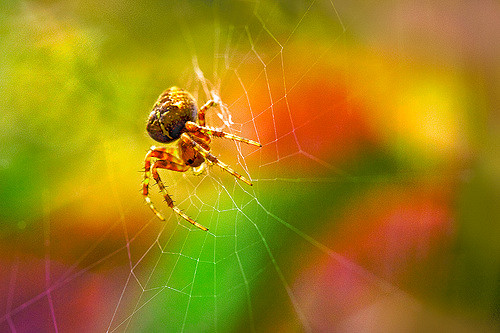
Bokeh & The Spider
100mm f/2.8 Macro lens, f/6.3, 1/40, ISO 400.

Posted on TWiP.

I try to rent different lenses for my dSLR as much as possible. I find it a great way to explore photography and keep myself inspired. I rented my first macro lens this weekend, the Canon EF 100mm f/2.8 Macro with the goal of DIYing a little macro studio and shooting some cool product shots. But, I really dropped the ball and ended up not having any time to shoot anything.

Plus, I was having some “bad creative days”. I sometimes have days where I have ideas, but I can’t completely visualize the end product, so I somehow talk myself out of even trying to figure it out. This endless circle of doubt just smacks my creativity in the face and wastes so much time, like my entire weekend.

So 45 mins before I had to return the lens to Beau Photo, I kicked myself in the rear and out the door with the goal of grabbing at least one decent shot. I poked outside my apartment building for something interesting to shoot and ran into this friendly spider.

At first, the shot didn’t look great. The sky was blah grey, there was no light, the spider’s web didn’t have any raindrops, it was all very bland. But, determined as I was, I crouched in a big mud puddle and angled the frame, so the spider was sitting in colourful background, instead of the grey sky. And bam! Something decent.

The focus on the spider was a bit soft in the final image, so I sharpened it in Aperture. I aslso amped the saturation of the yellow. The rest of the colours were just that vibrant. It’s not a shot I would ever dream of taking, but there it is.

The point is, even on your worst photo days, you can catch a great shot. Keep shooting, keep exploring, and stay positive about your photography. Just start shooting anything, inspiration will strike sooner than you think.

Mostly Lisa’s Macro Tips:

  1. Use Manual focus. Use Auto focus to help grabbing your focus if you are having trouble, then switch over to Manual.
  2. Get low. Often the best angle is the one where you have to kneel in a pile of muddy guck. If you have sore knees, buy one of those gardening foam pads to kneel on.
  3. Explore Aperture. A small DOF less than f/4 will emphasize the subject, and make it stand out more from the background. This method called selective focus, is great to use if you your background is really distracting, like the fall leaves in my spider picture above. Conversely, if you want all of your subject in focus you will need a larger DOF f/8 or higher.
  4. Shoot in RAW. Always. You will get so much more detail, it will amaze you. You can thank me for your amazement later. :D

Feel inspired? Here are some more photo tips and shoot ideas:

How to shoot textures outdoors

Nov 8 2008

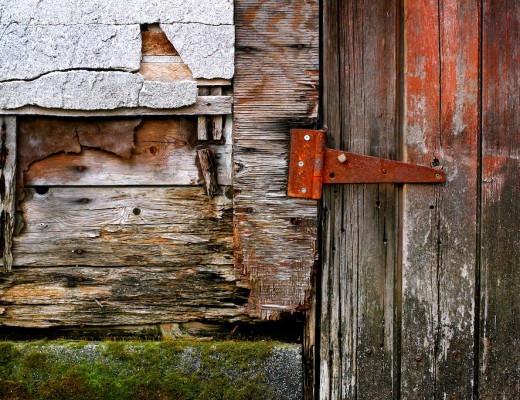
Textured: Mossy Rusty Woody Rocky Moldy
50mm, f/4, 1/80, ISO 200.

Lurking around every corner is texture. You may not notice them upon first glance, but if you take a closer peek in the crooks and crannies of your neighbourhood, you will find a whole world of excellent textures to capture: Mossy rocks, rotting wooden fences, rusty hinges, chipped paint on window sills, and corrugated metal doors. It’s out there just waiting for you to shoot! And unlike people and animals, mossy rocks sit still for hours with little to no complaints.

You’ll want to shoot in the early morning or during magic hour (one hour before sunset) to get the best light for showing texture. Great light will help define the surface texture and bring out all the little details. Get up really close with a macro lens and magnify the subtle flaws of the texture. Or conversely, look for patterns in the flow in the texture on a larger scale. Think of the patterns created by hundreds of roof shingles, or miles of rippled sand.

If the texture is part of a larger scene like the rippled sand, try shooting a wider frame like the shot below. The contrast of the different textures makes the photo dynamic. Framing contrasting textures together, i.e., blades of grass breaking through a heavy concrete wall, can also provide an extra thematic layer to your photos. You know, struggle against oppressors and the environment and sustainability and serious stuff like that.

Even if you don’t see the covert symbolism, somebody smart will. When they tell you, just nod, smugly smile and say, “Mmm. Yes, that was exactly what I was trying to capture. Not many people catch that.” Even if it’s not true, it’s a double win. You seem like a deep artist for actually creating something with meaning, and they feel like an intellectual “art critique” for having their thematic analysis affirmed.

Textured: Rusty
50mm, f/2.8, 1/80, ISO 100.

PS. Don’t be afraid of trying different angles, especially low ones, using different lenses, and experimenting with composition.

Share your best textured picts or stories in the comments.

5 Photography Projects for Rainy Days

Nov 2 2008

Posted on TWiP.

Fall is slowly fading away. The days are short, wet & cold, and the sky is one shade of monotonous grey. I don’t know about you, but I feel like completely hibernating.

Here are 5 photography projects to keep you inspired during the cold, soggy, rainy days:

1. Put your rubber boots on and grab some dewy macros.

abstract of a large leaf with raindrops
50mm. f/1.4, 1/320, ISO 200.

Now is the perfect time to get raindrop covered plant life shots for your portfolio. The light is nice and soft on cloudy days, so you’ll get even light on your subject. Don’t be afraid of getting up close and trying multiple angles. Keep shooting until you find the best angle that makes those raindrops sparkle.

You’ll want to shoot with your Aperture wide open, so you can keep your ISO low and get loads of delicious bokeh. Bring your tripod along just in case you need some steadying. And wear some rubber boots, because you’ll probably be crouching in a huge puddle o’ mud the entire time!

2. Wait for that perfect moody winter sunset.

W. 4th Ave, Kitsilano, Vancouver
18mm, f/5.6, 1/15, ISO 400.

Even on cloudy days the sun can make a brief apperance. And when it does, it’s usually spectacular. If you see the sun start to peak through the clouds during magic hour (1 hour before sunset), bundle up and head out to great landscape location. Winter skies are rich with colour. Add some thick clouds and you’ve got a great shot. There is nothing more magical than sun rays beaming through a dark and moody sky.

3. Get creative with strobes.

Apple Hype Monster

Get that flash off your camera and grab some gels and get creative. Set up a little studio in a corner of your place and shoot some stills with character. Check out Strobist for the 411 on off-camera flashes and cheap DIY projects to keep you inspired and busy on a gloomy day.

4. Set-up some stills on your window sills.

Breakfast Croissants at the Angel, Bury St. Edmunds, Suffolk, UK
50mm, f/1.8, 1/80, ISO 400.

If you don’t have flashes or triggers, no fear! Make use of the lovely diffused light coming through your living room windows and snap a still shot of your tea time snacks, little toys, your little sister, sea monkeys, or whatever strikes your fancy. You probably want to set up a bounce or white board opposite the window to get some light on the subject.

5. Find hidden gems in your old photos.

bowl of colourful cufflinks
50mm, f/2, 1/125, ISO 200.

Get a big cuppa tea and look though your old photos. As you go, mark or star the photos you think have promise. After you’ve gone through once, go back and pull your top ranked photos into a photo editor (LR, PS, Aperture) and really work on them. A little cropping, sharpening, saturating, some layers and masks and voila! Great shot. You never know what amazing shots are hiding in your archives.

If all else fails, just hunker down in your bed with a stack of DVDs and call it a day.

How to Shoot a Panoramic with Scott Stulberg

Oct 24 2008


Even professional photographers don’t get the perfect shot straight out of the gate. The difference between professionals and amateurs, is that pros don’t give up until they’ve got that perfect shot. They make get frustrated, but they try and try and try again, even in the freezing cold dawn with their feet in mud in the wilds of Wyoming.

I found it very insightful to watch Scott Stulberg fail his first two attempts of taking the panoramic, but by using different zoom and exposure settings and a certain level of patience, he was able to get a perfect shot. Here is Scott’s panoramic of Oxbow Bend at the Aperture Nature Photography Workshop (taken minutes after the video was taken):

pano1_oxbow
Photo by Scott Stulberg.

A review of Scott’s tips for taking a panoramic:

  1. Use a solid & level tripod
  2. Check to make sure your entire shot is level and all your subject is in your frame
  3. Shoot on Manual so that all your settings stay constant
  4. Use a cable release
  5. Overlap each shot by 20%
  6. Stitch photos in post

I think the moral of the story is that you should never give up on a shot, especially a complicated shot like a panoramic. Try a different angle, focal point, aperture, exposure and see if you can make the shot work! Hope this inspires you to go out and take some panoramic shots yourself.

What are your experiences shooting panoramic shots?

Intro to Astrophotography

Oct 17 2008

Mostly Astronomy! Look at those stars!

My first time shooting the stars was a memorable event. I’ve always been facinated by stars. My childhood room was plastered with constellation, galaxy and astronomy posters. I even had the main constellations replicated in glow-n-the-dark stars on the slanted ceiling above my bed. I was seriously into stars. So much so, that I only alloted a small 6×6″ piece of wall for Matt Damon.

On the last day of the Aperture Nature Photography Workshop, I was elated when Scott Stulberg suggested that we decided to stay long into the night to capture some astronomical pictures. We did have to forgo dinner and general warmth, but it was well worth it.

The group was lead by Scott Stulberg & Martin Gisbourne, an experienced astrophotographer who guided us through the sky and found a perfect spot right below the Milky Way for us to set up our gear.

It’s really important to set up your tripod and camera and find your frame and focus point before it gets dark, because when it’s dark, you can’t see a whole lot through your view finder. I learnt my lesson by finding the edge of a huge tree in a lot of my star pictures after the fact. I think the tree decided to move in my frame just to spite me. Jerk.

Also, if you don’t have a headlamp flashlight, get one. They are essential for early morning or night shoots. Trust me, mounting a camera on a tripod or changing a CF card in the dark is not a good idea. Also, the iPhone flashlight app does not give sufficient light for finding anything really. Tried. Tested. And true. And dress warm, like a Michelin man amount, as it gets a wee bit chilly waiting for those 30s exposures.

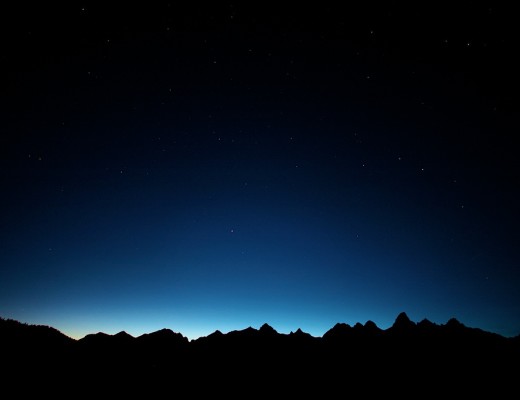
As soon as the sky was dark, the group started shooting. It was really tough to get the stars in focus and the photos weren’t coming out the way we wanted. Scott Stulberg and I ended up breaking from the group to do some crazy light painting of the Mormon barns which I”ll talk about in another post. When we came back we ran into legendary Nikon photographer, Dave Black, and his pals shooting some spectacular shots of the stars in a completely different position in the sky. We asked them how they were getting such clear shots. He said that the trick is to set your focus to manual, on infiinite focus, positioning the cursor right in the middle of the ∞. Then we had the magic formula:

Aperture at f/2.8,
Shutter speed at 25-30s,
Manual focus set to infinite focus,
ISO cranked to 3200 to 6400 (for those of us with Nikon D3s).

The only problem was, Scotty’s camera was outta juice and he forgot his spare battery (tsk, tsk) and my lil Xti couldn’t hack it, so Richard generously loaned us his Canon 1D Mark III to get this magical shot.

Most of us were shooting with wide-angle lenses, as wide as a 14mm fisheye, to get in as much sky as possible. But if you’ve got zoom, use it, especially if the moon is out and aboot.

I hope this has given you the inspiration to go out and take your own star shots. If you get any good ones be sure to link them in the comments!

Mostly Lisa’s Guide to Photographing Models

Sep 12 2008

Lisa Bettany (MostlyLisa.com)
Photo by Redpilot Media.

The move from photographing Whiskers, the neighbourhood cat to Bianca, the 17-year-old leggy Italian model can be traumatic for both you and Whiskers. That didn’t make sense. I digress…

I’m not sure why people love shots of scantily clad female models. I find the subtleties of the western marmot’s feeding pattern a lot more interesting, but I’m guessing most of you will disagree with me. That’s why as a photographer /slash/ model who has experienced enough horror photo shoots to fill a pretty hardy paperback, I feel that it is my duty to inform you of some basic tips to help you take awesome model shots and avoid embarrassing, and often times, permanently scarring, photo shoots.

1. Hire a professional model.

Your girlfriend may be lovely, but unless she is a trained model, your shots will always look amateurish. Plus, asking your sweetie to pad her bra with tissues, suck in her gut, and angle herself so her butt doesn’t look huge, will never lead to relationship bliss.

If you are just starting out, then grab all your modelish friends, by all means, but modeling actually involves skill and if you want to take your shots from “Oh that’s really pretty” to “BAM! That could be in a fashion magazine”, you need a professional model.

What to do: Start by developing a relationship with a local modeling agency and offer to do a few “test shoots” with their up & coming models for free or a small fee. Beginning models will jump at this because they need to fill their portfolio as quickly and cheaply as possible. Because of my schister of an agent, my first test shoot cost me $900. Exactly. So if you take awesome shots and don’t act like a giant douche, then you’ll quickly move up the ranks and will be able to work with the more experienced models.

2. Hire a good makeup artist.

Details matter in this industry and bad makeup and hair can ruin your pictures. Unless you are a PS pro and can make Rosie O’Donnell look like Gisele Bündchen, then you need to get it right when you shoot. And if you are like most photographers you might not be completely in the know when it comes to picking the perfect shade of lipstick.

Oh I dunno, I much prefer “Innocent Starlet” to “Sassy Schoolgirl Scarlet”. I bet you didn’t even know lipstick had such lame and sexually stereotyped names did you? Exactly. That’s why you need a makeup artist.

What to do: Well, first don’t go down to your local department store and hire the first overly perfumed Chanel girl with black nail polished finger nails. Trust me. I mean really trust me. Not a good idea. Hire a proper makeup artist from an agency or professional salon. This will probably cost about $40. It’s worth it. If you don’t have the coin, check out the recent grads a professional makeup school, they are usually willing to do makeup for free for a print for their portfolio.

3. Hire a photo assistant.

No model will be impressed when you hand them a huge pelican full o’ gear and ask her to lug it over beached logs and heaps of sand. Trust me, it’s in your best interest to keep your model’s hair and makeup as fresh as possible. And that ain’t gonna happen if she’s truckin’ all your gear half way across the desert.

Ditto with holding the bounce. It’s awkward enough jamming yourself into crazy poses, let alone trying to hit those wacky poses while holding a huge white board in front of your face. Plus, if you are dealing with umbrellas and flashes and heaps of pricy gear, you’re gonna want to keep your photo gear protected from the elements, both weather and thieving humans.

What to do: If you don’t have the funds to pay for a qualified photography assistant, ask at local photography schools for someone willing to assist for free, or wrangle one of your friends or the model’s friend to help. Also, check out the bulletin boards at local camera stores. There are heaps of biz cards that might lead you to a good helper.

4. Don’t be creepy. Period.

Photogs who frequently hound models to drop their bikini tops, even in jest, get bad reputations with models and their agents. There are a lot of really awkward situations between a model and a photographer, i.e. changing clothes on a beach.

What to do: If you have a female assistant, ask her to hold a towel over the model or suggest that she changes in your car if it’s available. If none of these options are doable, make sure you bring a large towel, XXXL tee, or robe for the model to change in and make sure you keep your eyes in the opposite direction.

Also, be careful how and what you say when directing your model to move parts of her girly anatomy. “Hey darling, give your tits some love will you, I need perky perky for this shot!” And before you ask, yes someone said that to me. One more point, asking the model out after the shoot? Yeah. Not so much Creeperson.

5. Bring these things to photo shoots:

Bottled water to keep her hydrated. A snack if it’s a long shoot. Fainting models aren’t the funnest <– (yeah Steve Jobs, funnest.). A long puffy jacket or bath robe to keep her from freezing. A towel or blanket for her to sit on between set-ups. A water spray bottle to wet hair in the case of wind or to get that sexy dewy wet look. Hair spray because she will always forget and fly aways are PS hell. A lipstick or sample from the makeup artist so you can do touch ups during the shoot.

There you go! You’re on your way to become a photographer models love to shoot with and not that jerk she calls Pervy McPerverson to all her gossipy model friends.

Questions/Comments?

Oh and if you’ve had any model photo shoot horror stories, you know I want to hear them.